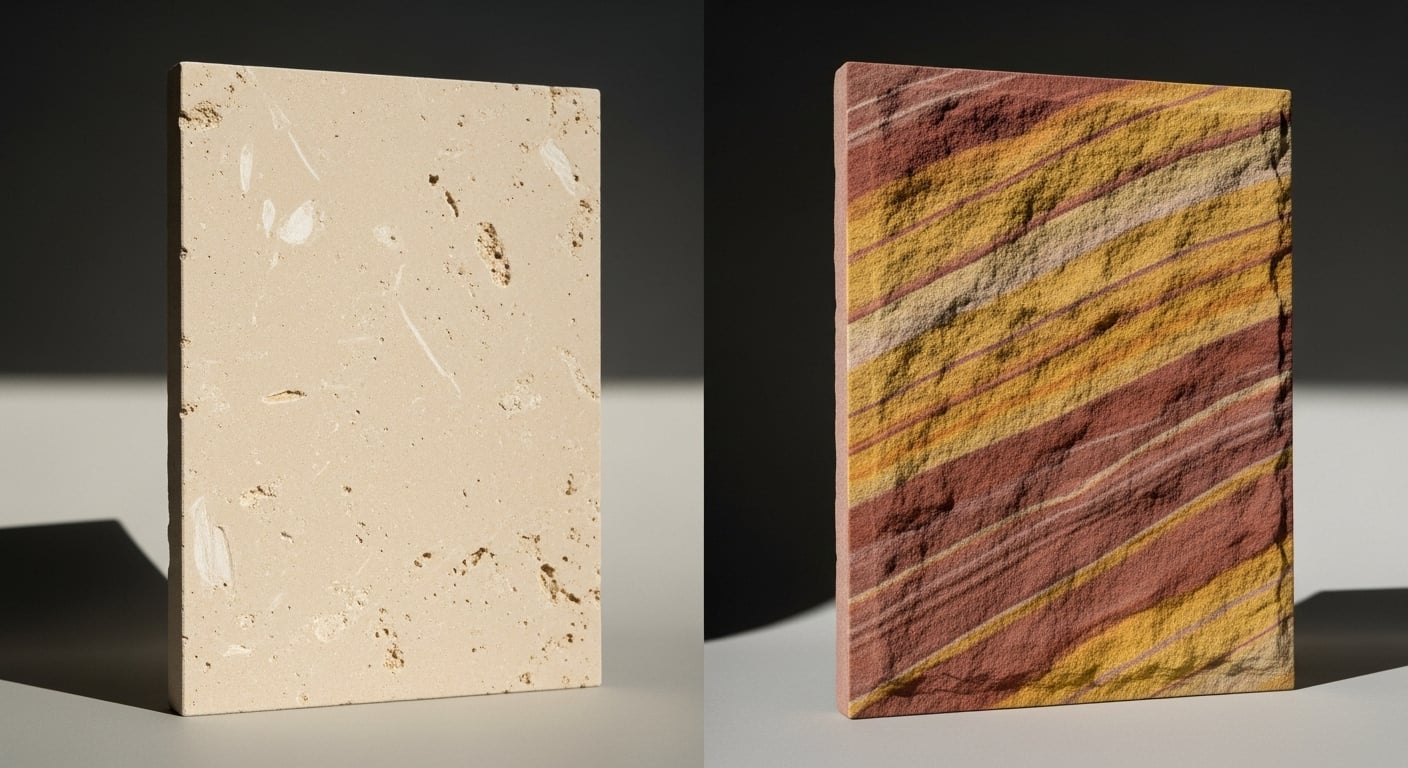
Choosing between limestone and sandstone can be a daunting task, especially when both materials offer unique benefits. Understanding the differences between these two stones is crucial for making an informed decision.
In this guide, we will explore the characteristics, uses, and advantages of limestone and sandstone.
Table of Contents
What is limestone?

Limestone is a sedimentary rock primarily composed of calcium carbonate. It forms in marine environments through the accumulation of shell, coral, and algal debris. Over time, these materials compact and cement together, creating limestone.
Limestone is known for its durability and versatility. It is often used in construction and architecture due to its ability to withstand weathering and erosion. Limestone’s natural beauty and variety of colours make it a popular choice for both interior and exterior applications.
In addition to its aesthetic appeal, limestone is valued for its eco-friendly properties. It is a natural material that requires minimal processing, reducing its environmental impact. This makes it an attractive option for sustainable building projects.
For those interested in fire-resistant options, limestone is a non-combustible material, adding an extra layer of safety to any project. Its ability to resist fire makes it suitable for a range of applications, including cladding systems.
What is sandstone?

Sandstone is another sedimentary rock, composed mainly of sand-sized mineral particles or rock fragments. It is formed through the compaction and cementation of sand over millions of years. The binding material in sandstone can vary, affecting its colour and texture.
This stone is prized for its rich textures and warm tones, making it a popular choice for decorative purposes. Sandstone’s natural beauty is often highlighted in landscaping, paving, and wall cladding.
Sandstone is also known for its porosity, which allows it to absorb water. This characteristic can be both an advantage and a disadvantage, depending on the intended use. Proper sealing can enhance its durability and reduce maintenance requirements.
Despite its porous nature, sandstone is a robust material that can withstand significant wear and tear. It is often used in high-traffic areas where durability is essential, such as public spaces and commercial buildings.
What are the differences between limestone and sandstone?
Aesthetics and appearance
Limestone and sandstone each offer distinct aesthetic qualities. Limestone typically presents a more uniform appearance with subtle variations in colour, ranging from white to grey to beige. Its smooth texture makes it ideal for sleek, modern designs.
Sandstone, on the other hand, is known for its vibrant colours and unique patterns. It can range from earthy browns and reds to lighter shades of yellow and pink. The natural layering and grain of sandstone add depth and character to any space.
Uses and applications
Limestone is commonly used in construction for building facades, flooring, and decorative elements. Its durability and resistance to weathering make it suitable for both interior and exterior applications.
Sandstone is often chosen for its aesthetic appeal in landscaping, paving, and wall cladding. Its natural beauty and texture make it a favourite for creating visually striking outdoor spaces.
Durability and hardness
Limestone is generally harder and more durable than sandstone, making it a preferred choice for structural applications. Its ability to withstand weathering and erosion ensures longevity in various environments.
Sandstone, while slightly softer, is still a durable material. Its porosity can be managed with proper sealing, enhancing its lifespan and reducing maintenance needs.
Maintenance
Both limestone and sandstone require regular maintenance to preserve their appearance and integrity. Limestone may need periodic sealing to protect against stains and moisture.
Sandstone’s porosity means it can absorb water and stains more easily. Regular sealing and cleaning is essential to maintaining its beauty and durability.
Given its porous nature, sandstone can be susceptible to absorbing liquids that cause staining. Regular cleaning and sealing maintenance are crucial steps for preserving its inherent beauty and structural integrity over time.
Price
The cost of limestone and sandstone can vary depending on factors such as quality, availability, and location. Generally, limestone tends to be more expensive due to its durability and versatility.
Sandstone is often more affordable, making it an attractive option for decorative projects where budget constraints are a consideration.
Limestone vs Sandstone: Which Is The Best Choice?
Façades for commercial and office buildings
For commercial and office buildings, limestone is often the preferred choice due to its durability and elegant appearance. Its ability to withstand weathering makes it ideal for exterior facades.
Sandstone can also be used for facades, offering a unique aesthetic with its natural patterns and colours. However, it may require more maintenance to preserve its appearance over time.
Hospitality projects: Hotels & Resorts
In hospitality projects, both limestone and sandstone can create luxurious and inviting spaces. Limestone’s smooth texture and subtle colours are perfect for creating a sophisticated atmosphere.
Sandstone’s warm tones and textures add a natural, earthy feel to hotels and resorts, enhancing the overall guest experience.
High-traffic public spaces

For high-traffic public spaces, durability is key. Limestone’s hardness and resistance to wear make it an excellent choice for flooring and cladding in busy areas.
Sandstone can also be used in public spaces, but its porosity means it may require more frequent maintenance to ensure longevity.
Interior applications in premium spaces
In premium interior spaces, limestone’s elegant appearance and versatility make it a popular choice for flooring, wall cladding, and decorative elements.
Sandstone’s unique patterns and colours can add character and warmth to interior spaces, making it a desirable option for feature walls and accents.
FAQs
Which is better sandstone or limestone?
The choice between sandstone and limestone depends on the specific requirements of your project. Limestone is generally more durable and versatile, while sandstone offers unique aesthetic qualities.
Which is more slippery, limestone or sandstone?
Limestone tends to be more slippery than sandstone due to its smoother texture. However, both materials can be treated with anti-slip coatings to enhance safety.
How strong is limestone compared to sandstone?
Limestone is generally stronger and more durable than sandstone, making it a preferred choice for structural applications. Its hardness allows it to withstand significant wear and tear.
Which is older sandstone or limestone?
The age of sandstone and limestone can vary depending on their formation. Both are sedimentary rocks that have formed over millions of years, but specific deposits may differ in age.
Does water damage sandstone?
Sandstone is porous and can absorb water, which may lead to damage if not properly sealed. Regular maintenance and sealing can help protect sandstone from water-related issues.