When considering natural stone options for your next project, the choice between travertine vs limestone can be pivotal. Both stones offer unique characteristics that cater to different aesthetic and functional needs.
In this guide, we will explore the distinct features, applications, and benefits of each stone.
Table of Contents
What is Travertine?
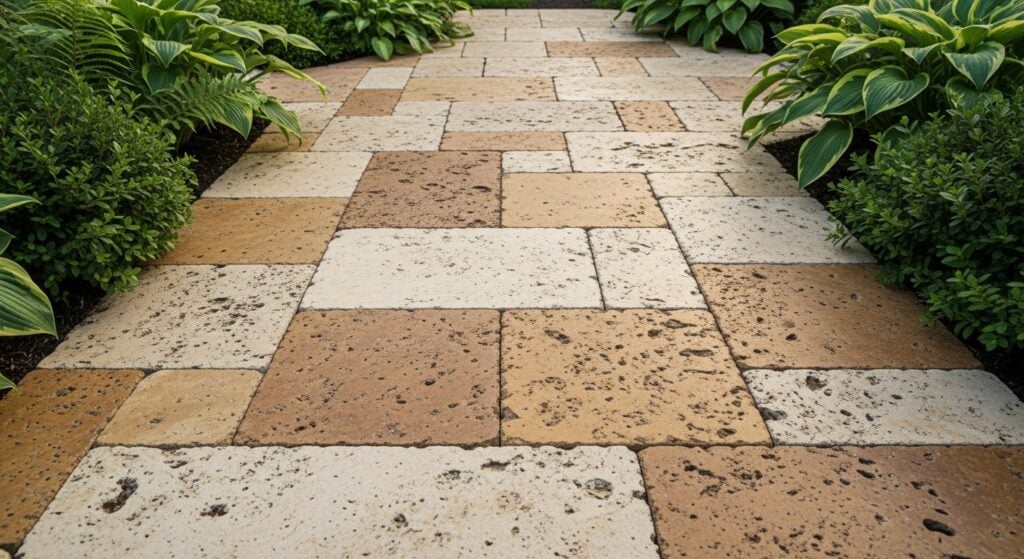
Travertine is a type of limestone formed by mineral springs, particularly hot springs. It is characterised by its porous surface and earthy tones, ranging from ivory to deep brown. This stone is often used in its natural state, which showcases its unique textures and patterns.
Due to its formation process, travertine often contains voids and holes, which can be filled or left unfilled depending on the desired finish. The stone’s natural beauty and warmth make it a popular choice for both interior and exterior applications.
Travertine is commonly used in flooring, wall cladding, and as a decorative stone in gardens and patios. Its ability to withstand varying weather conditions makes it suitable for outdoor use.
However, travertine requires regular maintenance to preserve its appearance and prevent staining. Sealing the stone can help protect it from moisture and spills.
What is Limestone?
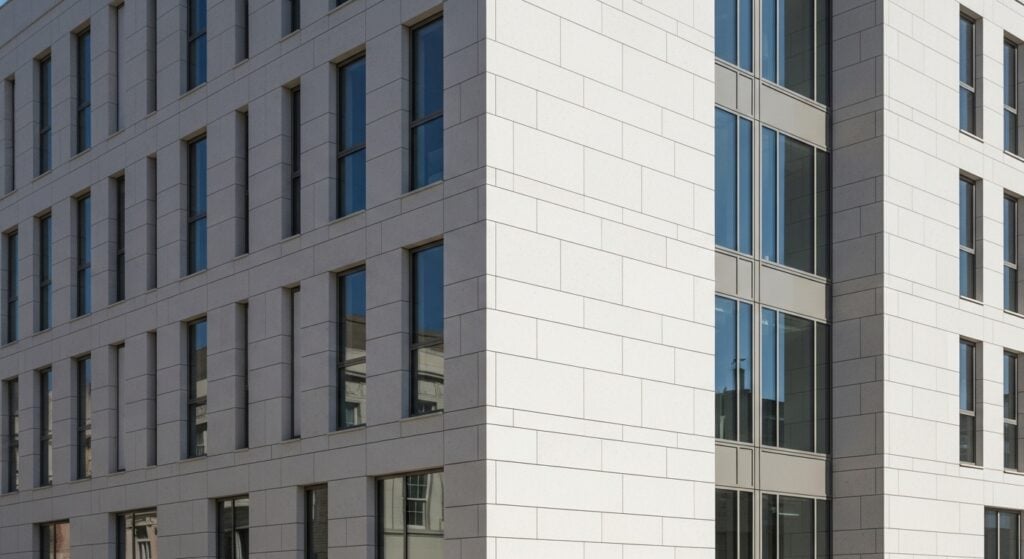
Limestone is a sedimentary rock composed mainly of calcium carbonate. It is formed from the accumulation of shell, coral, algal, and faecal debris in marine environments. Limestone is typically light in colour, with shades ranging from white to grey and beige.
This stone is known for its versatility and is widely used in construction and architecture. Limestone can be polished to a smooth finish or left in its natural state for a more rustic look.
Common applications of limestone include building facades, flooring, and as a base material for roads and railways. Its durability and ease of cutting make it a preferred choice for architects and builders.
While limestone is generally more durable than travertine, it can still be susceptible to acid damage and requires proper care to maintain its integrity.
What are the Differences Between Travertine and Limestone?
Aesthetics and Appearance
Travertine is known for its distinctive porous texture and warm, earthy tones. It often features natural patterns and veining that add character to any space. Limestone, on the other hand, offers a more uniform appearance with subtle colour variations.
While travertine’s natural voids can be filled for a smoother finish, limestone’s surface is typically more consistent. This makes limestone a popular choice for projects requiring a sleek and modern look.
Uses and Applications
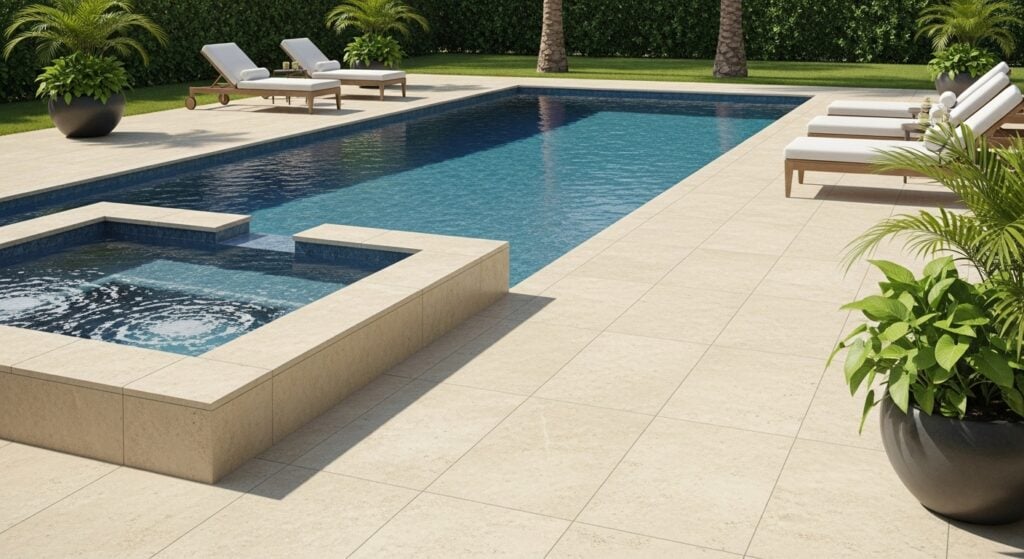
Travertine is frequently used in outdoor settings such as patios, pool decks, and garden paths due to its natural slip resistance. It is also a popular choice for interior flooring and wall cladding.
Limestone’s versatility allows it to be used in a wide range of applications, from building facades to interior flooring. Its durability makes it suitable for high-traffic areas and structural elements.
Durability and Hardness
While both stones are durable, limestone is generally harder and more resistant to wear and tear. This makes it a better option for areas with heavy foot traffic.
Travertine, being softer, may require more maintenance to prevent scratches and chips. However, its natural beauty often outweighs these considerations for many homeowners and designers.
Maintenance
Travertine requires regular sealing to protect against stains and moisture. Its porous nature means it can absorb liquids, leading to potential discolouration if not properly maintained.
Limestone also benefits from sealing, though it is generally less porous than travertine. Regular cleaning with a pH-neutral cleaner will help maintain its appearance over time.
Price
The cost of travertine and limestone can vary depending on the quality, finish, and source. Generally, travertine is more affordable than limestone, making it an attractive option for budget-conscious projects.
Limestone’s higher price point reflects its durability and versatility, often justifying the investment for long-term applications.
Travertine vs Limestone: Which Is The Best Choice?
Façades for Commercial and Office Buildings
For commercial and office buildings, limestone is often the preferred choice due to its durability and ability to withstand environmental stressors. Its uniform appearance also complements modern architectural designs.
Travertine can be used for decorative elements or accent walls, adding warmth and texture to the building’s exterior.
Hospitality Projects: Hotels & Resorts
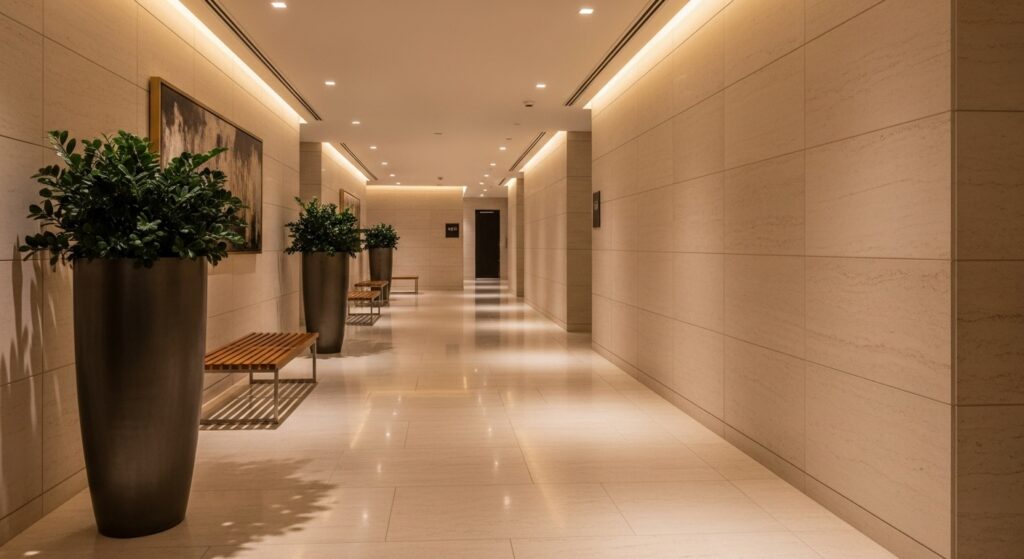
In hospitality settings, travertine’s natural beauty and warmth make it a popular choice for lobbies, pool areas, and spa facilities. Its slip-resistant properties are particularly beneficial in wet areas.
Limestone is often used in high-traffic areas such as corridors and dining spaces, where its durability and ease of maintenance are advantageous.
High-Traffic Public Spaces
Limestone’s hardness and resistance to wear make it ideal for high-traffic public spaces such as airports, train stations, and shopping centres. Its ability to withstand heavy use without significant wear is a key consideration.
Travertine can be used in less-trafficked areas or as a decorative element, providing a touch of elegance and sophistication.
Interior Applications in Premium Spaces
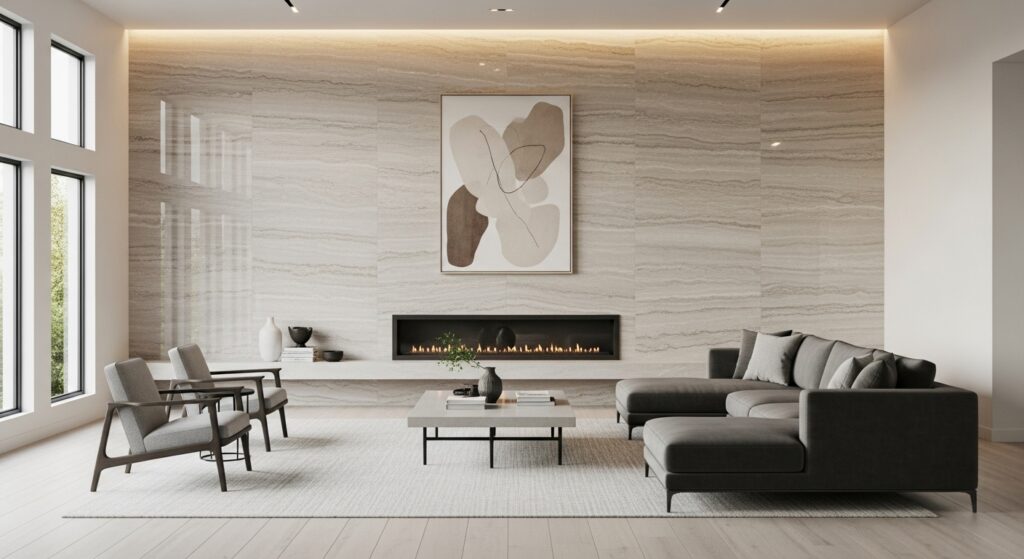
For premium interior spaces, both travertine and limestone offer unique benefits. Travertine’s natural patterns and warm tones create a luxurious atmosphere, ideal for feature walls and flooring.
Limestone’s sleek appearance and durability make it suitable for modern interiors, where a clean and polished look is desired.
FAQs
What is better, travertine or limestone?
The choice between travertine and limestone depends on the specific needs of your project. Travertine offers natural beauty and warmth, while limestone provides durability and a uniform appearance.
Which is more durable, limestone or travertine?
Limestone is generally more durable than travertine, making it suitable for high-traffic areas and structural applications. Travertine, while softer, is still a robust option for many uses.
What is the disadvantage of travertine?
Travertine’s main disadvantage is its porous nature, which requires regular sealing to prevent stains and moisture damage. It may also be more susceptible to scratches and chips compared to harder stones.
What are the disadvantages of limestone flooring?
Limestone flooring can be prone to acid damage and may require sealing to protect against stains. It is also generally more expensive than other natural stone options.
Does travertine get hot in the sun?
Travertine can absorb heat from the sun, making it warm to the touch. However, its natural composition allows it to remain cooler than many other paving materials, making it a comfortable choice for outdoor areas.