The necessity for robust security tested facades or internal cladding systems is no longer a local project concern but a fundamental requirement for modern infrastructure across the United Kingdom, Europe, the USA, and the GCC. As geopolitical instability deepens, the threat of global terror has become increasingly decentralized and unpredictable, occurring without warning in once thought secure public spaces.
In this era of heightened unease and economic volatility, failing to implement blast-tested systems is no longer a mere budgetary choice; it is a critical liability. For specifiers working on airport terminals, rail station interchanges, underground stations, metros, embassies, or critical national infrastructure, blast resistance is not a “value add-on” to be weighed against cost, it is a mandatory procurement gate.
An exterior façade or interior cladding system lacking verified arena-scale blast certification is fundamentally ineligible for tender approval or public safety in modern infrastructure, regardless of its aesthetic or thermal performance. This reality shapes the specification process from the earliest design stages, driving tested system material selection and the rigorous “Golden Thread” of documentary evidence required by modern regulators.
As most rainscreens or cladding systems on the market are not blast-tested and not able to withstand the loadings applied in the event of an explosion, accepting claims unsupported by transparent, certified third-party test report data, poses a severe risk to project integrity and public safety.
In a world where the “where” and “when” of a threat are unknown, the “how” of a building’s defence must be certain; specifying certified systems is the only way to satisfy the legal, moral, and commercial demands of modern global infrastructure.
There is a growing, unspoken consensus within global society that public safety must be an inherent feature of our infrastructure, rather than an afterthought. The quiet expectation of every commuter and family today is that the materials surrounding them in our transport hubs and civic buildings have been held to the most rigorous, arena-scale certification standards, ensuring that the environments where we spend our lives are as resilient as they are functional.
In an increasingly unpredictable landscape, this peace of mind is the fundamental currency of public trust; it is the certainty that the spaces we inhabit are engineered to be resilient, providing an invisible but absolute layer of protection for our communities.
This article is a specification reference for the UK, Europe, the GCC and global specifiers writing or reviewing blast-related façade and internal cladding requirements. It covers the standards that matter, the testing distinctions specifiers need to recognise, how natural stone rainscreen cladding performs under blast loading, and the sector-specific considerations that apply to airports, metros, rail, embassies and critical infrastructure projects.
Table of Contents
What blast specifications defend against

Blast specifications for high-risk assets are dictated by stringent counter-terror mandates and critical national infrastructure (CNI) protection protocols. The threats these specifications address are generally categorised into three primary categories: Vehicle-Borne Improvised Explosive Devices (VBIEDs), which generate high-magnitude pressure waves at a standoff distance; Person-Borne (PBIED) satchels or backpacks carried on the body and Static IEDs (S-IED), such as suitcases or parcels abandoned in high-traffic public zones like airport terminals and metro concourses.
As each scenario produces a unique interaction of peak overpressure and positive phase impulse loadings, façade systems must be validated against specific loading profiles that align with the project’s rigorous threat assessment.
Since the combination of peak overpressure and positive phase impulse loadings varies across each threat scenario, exterior façade systems or internal cladding must demonstrate proven performance against pressure loading specifications that are specifically calibrated to the project’s security requirements.
Cross-Sector Compliance: The Fundamentals of Blast-Rated Design
The technical blast requirements for airports, metros, rail stations, and broader critical infrastructure are unified by a common specification logic, regardless of the differing regulatory frameworks or statutory mandates that govern them. Whether it is an airport terminal in the United Kingdom, a metro interchange in the GCC, or a data centre serving critical functions in Europe or the USA, the requirement remains the same: blast-rated façades and internal cladding systems must be supported by certified testing and full-assembly evidence.
While sector-specific mandates, such as International Civil Aviation Organization (ICAO), Aviation Security in Airport Design (ASIAD), or Security in Design of Stations (SIDOS) introduce subtle shifts in compliance logic, they all converge on a single prerequisite, the system design must be backed by documented certification that validates the entire assembly against the unique environmental and security demands of the industry.
These requirements are generally defined by accessibility, the interplay of positive and negative blast impulses, and the stand-off distance, the critical proximity between the detonation source and the façade or internal cladding.
The Global Framework for Blast-Resistant Facades
Understanding ISO 16933:2007
At the heart of international security engineering is ISO 16933:2007, which provides a rigorous framework for assessing the blast-resistant performance of glazing, façade and internal cladding systems. Unlike laboratory simulations, this standard relies on physical arena testing to evaluate a system’s ability to absorb the kinetic energy of a blast wave and mitigate fragment hazards.
Classifications are determined by the specimen’s response to specific peak overpressure and impulse levels. While these are typically generated by defined explosive charge weights at set standoff distances, the final rating is a dual designation: it accounts for both the severity of the blast and the resulting hazard rating, the quantity and velocity of debris entering the protected space.
The Hierarchy of Classifications: EXV and SB.
In the UK, GCC and Global technical specifications, two primary classification categories are most prevalent:
EXV (Explosive Vehicle):
These classifications simulate vehicle-borne improvised explosive devices (VBIEDs). They are categorized by the standoff distance (in meters) from a standard 100 kg TNT charge. As an example, EXV25 is an arena blast test to ISO16933: 2007 using 100kg of TNT or equivalent at a stand-off distance of 25 meters.
SB (Satchel Bomb):
Satchel bomb explosion testing simulates smaller, hand-carried charges (typically 3 kg to 12 kg) detonated at very close proximity to the building.
It is a common misconception that only large vehicle-borne charges pose a threat. In reality, the same peak pressure and impulse on a facade can be achieved by significantly smaller explosive charges at a closer standoff distance. This “scaling” is a critical consideration in high-security design, where restricted urban footprints often bring the threat closer to the structure.
Internal and Underground Environments.
The physics of an explosion change dramatically when moving from an open arena to a confined space. In underground stations or interior applications, the “closed environment” of the building intensifies the effects of the blast. As the blast wave reflects off walls, floors, and ceilings, it creates a “reverberation” effect. This confinement significantly increases both the positive pressure and the negative suction impulses acting on the interior cladding systems. Consequently, interior systems often require higher security ratings than their external counterparts to account for these amplified, multi-directional loads.
It is critical to ensure that interior application specifications address more than just blast loading requirements. A secondary, yet equally vital consideration is fire safety, specifically non-combustibility to EN 13501-1 Class A1 or A2-s1, d0. The extreme heat and thermal energy released during a blast can instantaneously ignite surrounding combustible materials or dislodge electrical wiring, leading to immediate fire outbreaks.
In high-density environments such as airports, rail stations, and underground platforms, the use of non-combustible materials is non-negotiable. Combustible elements pose a severe secondary threat; the resulting smoke and toxic gases can lead to further casualties by causing asphyxiation, impeding visibility, and ultimately obstructing safe evacuation routes. In a confined transport hub, the ability to maintain clear, breathable escape paths is as essential to life safety as the structural integrity of the facade itself.
United Kingdom Security in Design: ASIAD and SIDOS.
For specialized infrastructure projects, the testing hierarchy is often dictated by sector-specific mandates:
ASIAD (Aviation Security in Airport Development):
This standard governs the security-driven design of airport terminals. It mandates full-scale assembly testing to ensure that the entire façade and interior cladding as a system maintains its integrity under blast loads.
SIDOS (Security in the Design of Stations):
The rail and underground equivalent to ASIAD. SIDOS focuses on protecting high-density transport hubs, also mandating full-scale assembly testing.
Both frameworks require empirical evidence of performance, often citing ISO or EN arena tests to validate that a system is “fit for purpose” in a high-threat environment.
The European Context: BS EN 13123 and BS EN 13124.
In the UK and European markets, blast resistance is also certified through the BS EN 13123 (classification) and BS EN 13124 test methods series. These standards provide two distinct methodologies:
Part 1 (Shock-Tube):
A laboratory-based test using compressed air to simulate a blast wave. These are designated as EPR ratings.
Part 2 (Arena Test):
An open-field test using high explosives, designated as EXR ratings.
Regional Equivalents.
While other countries may not use the names ASIAD or SIDOS, they use nearly identical frameworks based on the same testing methodologies (ISO 16933: 2007 or ASTM F1642).
USA:
The GSA (General Services Administration) and DoD (Department of Defense) standards serve the same purpose for American transport, government and military infrastructure.
UAE:
Dubai Law No. (2) of 2026 and the SIRA (Security Industry Regulatory Agency) guidelines, increasingly mirror the technical requirements of SIDOS, especially for airports, underground stations, metro networks and public venues.
The reason for these standards of exportation to different countries is that they represent a “proven” testing hierarchy. If a cladding system has been tested to meet SIDOS requirements, a developer in the UAE or Singapore knows it has passed a full-scale assembly blast test, proving that the system won’t fail, regardless of where in the world the building is located.
Why generic “robust” stone systems are not enough
While natural stone is intuitively associated with mass and durability, early-stage specifications often mistakenly assume that a substantial stone façade will inherently provide adequate protection under explosion blast loadings. In reality, stones behaviour during an explosion is a complex mechanical response governed by the interplay of the panel dimensions, mass, fixing geometry, sub-frame design rigidity, and retention strategy. Consequently, any system that has not been rigorously validated as a complete assembly under representative loading cannot be specified with confidence especially on projects where failure directly compromises life safety, operational continuity, or national security.
The primary risks in a blast event is a combination of the stone shattering with large heavy pieces falling from heights; the secondary lethal hazard of stone or material fragments splintering off causing further casualties, the materials blocking emergency response entry or exit locations and the total loss of the envelope integrity caused by inadequate retention. Within the Global markets, the vast majority of natural stone and rainscreen systems remain entirely untested for these conditions. Even systems that have been subjected to shock-tube testing, lack the essential evidence provided by full arena-scale explosion test detonations, which account for the true spherical wavefront and dynamic pressures of a real-world event. Ultimately, generic stone solutions, whether massive masonry or modern panelised systems that are untested possess neither the predictable engineering nor the verified system design required to withstand the devastating effects of a bomb blast event.
How standard natural stone systems behave under blast loadings
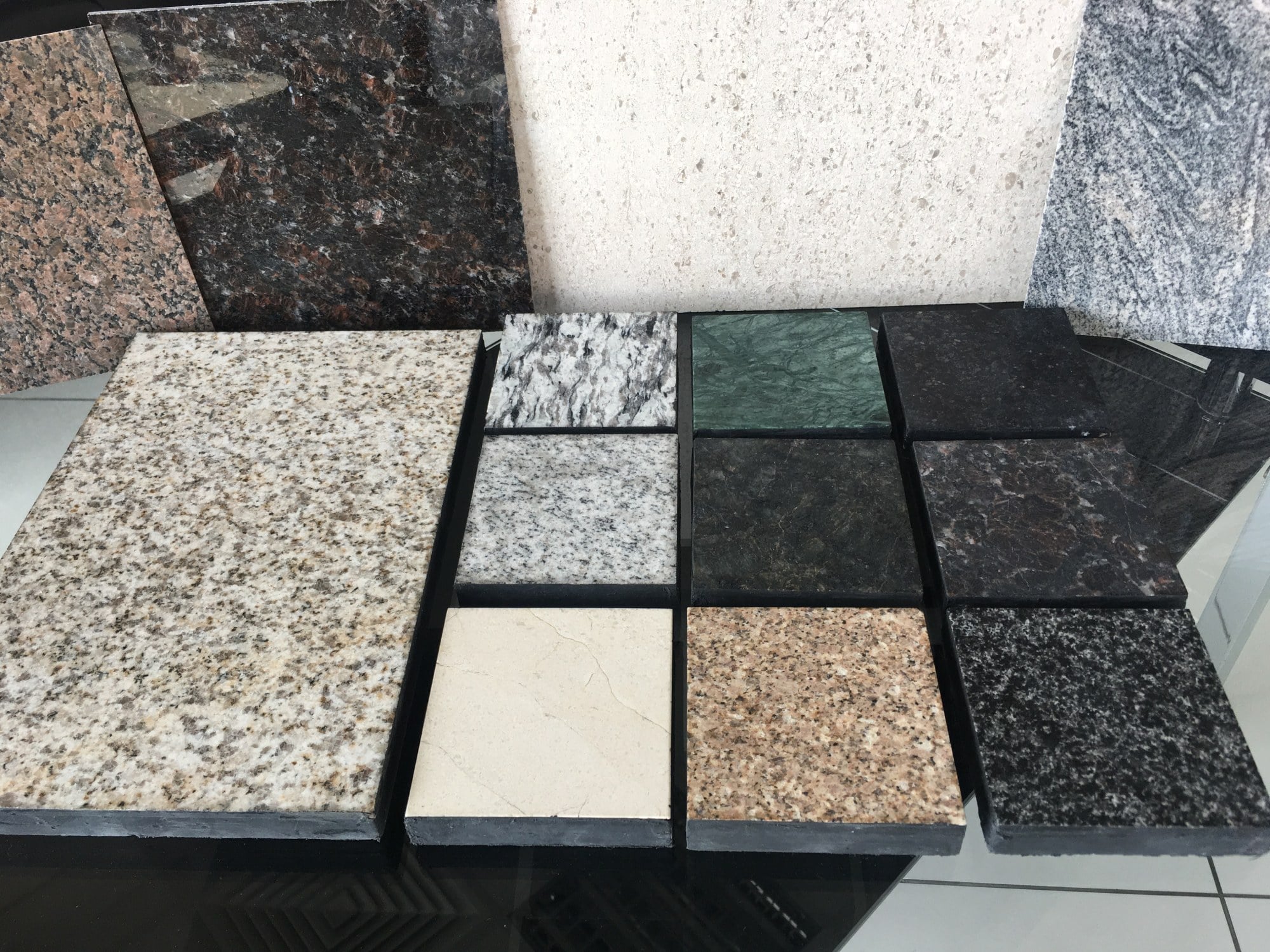
Natural stone such as limestone, granite, travertine and marble is a material characterized by its exceptional compressive strength but inherently limited tensile capacity. All natural stones share a fundamentally brittle nature. Under the extreme dynamic loading of an explosion, a stone element will undergo a predictable failure sequence, as the blast wave hits, the resulting bending stresses almost instantaneously exceed the stone’s tensile limits, leading to fracturing stone elements falling from the façade, the generation of lethal, high-velocity fragmentation and the blocking emergency response pathways.
The engineering advantages of blast tested stone rainscreen systems.
A rainscreen assembly separates the outer facade panel from the structural backing wall via a ventilated cavity, with the panel mechanically secured to a specialised sub-frame. When subjected to the extreme pressures of a blast event, this configuration provides three distinct engineering advantages over mechanically fixed monolithic or directly adhesive bonded stone systems.
1: Kinetic energy dissipation and ductility:
The primary strength of a high-performance rainscreen lies in its flexural strength and the controlled movement of the supporting sub-frame. Under a blast load, the entire assembly is engineered to flex, acting much like a tree in a gale. Just as a tree bends to absorb the energy of high winds before returning to its natural shape, the brackets and carrier rails are designed to dissipate kinetic energy progressively. This “give” in the system prevents the brittle, catastrophic failure seen in rigid, mechanical fixed or directly bonded stone facades.
2: Pressure equalisation and load reduction:
The ventilated cavity allows for partial pressure equalisation between the outer face and the void behind the panel. During the milli second duration of a blast wave, this reduces the net pressure differential acting across the panel. By “venting” the pressure, the system effectively lowers the peak load that the panel and its fixings must resist.
3: Integrity of the inner envelope:
The physical separation between the external panel and the backing wall provides a critical safety buffer. In the event of a high-magnitude explosion, any panel deformation or failure is isolated from the building’s primary weather line and structural slab. This ensures that even if the outer aesthetic layer is damaged, the inner envelope remains intact, preventing the blast wave and debris from entering the building and protecting the occupants within.
By combining the high flexural strength of engineered stone with a ductile sub-frame, Dynamic Cladding systems provide a resilient, “living” facade capable of absorbing and rebounding from extreme energy impacts.
ISO 16933:2007 Glass in building — Explosion-resistant security glazing and what arena testing proves.
Do not let the title fool you; while ISO 16933:2007 is officially categorized under “Glass in building,” its relevance in high-risk engineering extends far beyond the windows. In the world of high-performance façades, this standard serves as the definitive framework for testing complete wall assemblies, including stone, metal, and composite cladding systems.
The logic is simple: a blast does not differentiate between a glass pane and the stone panel adjacent to it. For a building to remain secure, the entire exterior envelope or interior cladding must perform as a single, cohesive unit. At Dynamic Cladding, we utilize these rigorous arena-testing parameters to ensure that every component from our DynaPanel Stone System works in total synchronicity. By testing the full assembly, we provide the verified evidence needed to prevent catastrophic failure and ensure the safety of both the public and critical staff members.
Beyond the “Shock-Tube”
This commitment to excellence means going beyond the “shock-tube.” While many systems are tested in controlled laboratory environments under ISO 16934:2007 or ASTM F1642 to find their positive impact blast pressure failure point, Dynamic Cladding focuses on full arena-scale data. Although the principal international standard’s title references glazing, its arena testing methodology is the reference framework specifiers use to evaluate the blast performance of full façade assemblies, including stone rainscreen build-ups.
Arena testing places a complete assembly at a defined standoff distance from a calibrated explosive charge in an open test arena, subjecting it to a real detonation. This produces a free-field, spherical pressure wave that loads the façade in the same way a real-world blast event would. During these tests, pressure transducers record peak overpressure and positive phase impulse, while high-speed instrumentation captures fragmentation, panel retention, and any debris hazard behind the assembly.
This matters because arena conditions reproduce loading geometry that laboratory shock-tube testing cannot. Shock-tube testing applies a planar pressure wave to a specimen mounted in a tube, which is useful for component-level evaluation, but it does not reproduce the spherical wavefront of a real detonation, the dynamic response of a complete assembly mounted in a representative sub-frame, or the critical negative-phase “suction” that follows the initial impulse. Because this negative phase is often what pulls untested systems off a building, arena evidence remains the essential benchmark for high-risk procurement.
How have we overcome this problem?
The engineering objective is to transform natural stone, whether limestone, granite, or marble from a brittle architectural finish into a high-performance, resilient safety element. By reducing the stone to a precise thickness and laminating it to a reinforced backing structure, we create a composite DynaPanel element that overcomes the traditional limitations of solid stone. The engineering challenge has long been the inherent brittleness of natural materials; however, the DynaPanel Stone system has successfully beaten this failure point. By moving away from heavy, unreinforced slabs, the composite build-up ensures that the critical safety metric fragmentation containment is fully addressed.
The structural retention of the assembly is maintained throughout the duration of the blast wave. Even under extreme loading, the mechanical fixing system and the integral secondary reinforcement work in tandem to prevent the disintegration and ejection of high-velocity shrapnel. By engineering out these natural weaknesses, we provide a system that ensures the facade or internal cladding remains a protective, high-strength shield for the building’s occupants, whilst delivering the exact same visual aesthetics as a standard stone system.
The relationship between the panel and the sub-framing solution.
The engineering of the sub-frame is every bit as vital as the specification of the stone panel itself. At Dynamic Cladding, our extensive investment in rigorous testing programs ensures that the panel and sub-frame function in perfect synergy as a single, high-performance unit. Every component is precision-engineered to command the full dynamic load, serving as the definitive line of defence even when the system is pushed to its absolute structural limit. Through our rigorous R&D and arena-scale testing, we have precisely optimized this relationship, engineering highly flexible, robust panel and sub-frame combinations that provide maximum resilience and structural stability without resorting to unnecessary bulk.
The definitive trait of a DynaPanel system is the built-in redundancy engineered directly into the fixing strategy. We create a fail-safe assembly that eliminates the need for the secondary restraint mechanisms typically required by inferior systems. This meticulous engineering of the entire build-up is what differentiates a high-performance, tested assembly from a standard rainscreen or internal cladding, ensuring the system can absorb and dissipate extreme energy while remaining securely attached to the structure.
What Dynamic Cladding’s Certified Systems Demonstrate

Our DynaPanel Stone system has been rigorously arena-tested in accordance with ISO 16933:2007, validating their performance under extreme peak pressures and positive-phase impulse loading. Our systems are engineered to meet the stringent VBIED and PBIED requirements mandated by ASIAD, SIDOS, CPNI, now the NPSA (National Protective Security Authority) and all other international public realm safety standards for critical infrastructure projects globally.
Critically, our test evidence is based on the full, as-installed configuration. This comprehensive approach evaluates the entire assembly, including the stone panel, sub-frame, brackets, carrier rails, and fixings, rather than just testing the panel in isolation. For specifiers developing facades or interior cladding systems for airports, metro stations, or national infrastructure projects, our testing provides the high-level empirical evidence required to support a fully compliant tender submission and ensures a robust, life-safety solution for high-risk environments.
Why This Matters for Your Project
Our holistic approach goes beyond simply specifying “strong” materials; we develop, engineer, and provide third-party verified evidence for a diverse range of stone types, from limestones to marbles and granites. By utilizing the ISO 16933:2007 testing method, we have gained a precise understanding of how each specific stone type behaves under the extreme overpressure and impulse loads identified in a project’s threat assessment for both our rainscreen ventilated facades and internal cladding systems. Our DynaPanel Stone systems are fully certified to withstand Vehicle-Borne Improvised Explosive Devices (VBIEDs), providing the ultimate layer of protection for critical infrastructure. Through our extensive and rigorous testing programs, Dynamic Cladding has solidified its position as the global leader in the market for high-performance, blast-tested exterior and interior cladding systems.
Aviation and Rail Ready:
Whether your project is governed by ICAO, ASIAD or SIDOS, our use of ISO 16933:2007 standards provide the documented certification required to pass stringent tender reviews for critical national infrastructure. By aligning our material innovation with these global security benchmarks, Dynamic Cladding transforms natural stone from an aesthetic choice into a high-performance security asset. To know more about our ISO 16933:2007 certification or request information about our latest 2026 Bomb Blast testing programs, click here to Request Technical Documentation
Sector Applications
Airports:
Terminal façades face distinct loading conditions across the landside and airside zones. Landside areas which include kerbside drop-off areas, public concourses and retail zones are accessible to vehicles and crowds. These areas are typically specified against VBIED, PBIED and SB, hand-emplaced threats. Airside façades face controlled-access loading profiles. ICAO Annex 17 and CAA security guidance establish baseline requirements; project-specific threat assessments dictate classification level. EXV arena test evidence is increasingly the procurement baseline for international landside terminal envelopes.
Metros And Rail Stations:
Station concourses, ticket halls, and transport interchanges combine high passenger volumes with public access, raising the consequence of fragmentation hazard. Specifications typically address hand-emplaced and person-borne threats and require evidence performance under close standoff explosions. Above-ground stations and elevated rail interchanges face additional loading geometry and factor both VBIED and PBIED considerations that should be reviewed with the manufacturer at the concept stage.
Embassies, Government Buildings and Critical National Infrastructure:
Counter-terror specification practice for embassies and government estates is governed by setback distance, perimeter standoff, and project-specific threat assessment. Data centres, energy facilities, and defence sites operate under different procurement frameworks but share the same engineering requirements: arena-tested assemblies, full classification evidence, and documented retention performance under loading representative of the assessed threat.
Verifying A Manufacturer’s Blast Claims
For a blast claim to support a tender submission, specifiers should require the following from a manufacturer: A third party witnessed test report identifying the standard evaluated against, such as ISO 16933:2007 or BS EN 13124-2 including the recorded peak pressure and positive phase impulse values. The report should describe the as-tested assembly in full, the panel and fixing configuration, the sub-frame lay-out including the brackets, structural rails, the fixings, and any retention components, this will allow the project assembly to be matched to the certified configuration. The accompanying photographic and instrumentation record should document fragmentation behaviour, panel retention, and debris hazard. Finally, an audit trail linking the tested assembly to the proposed project specification. The most common specification error at this stage is accepting a “blast resistant” marketing claim without requesting the underlying report. The second most common is accepting shock-tube evidence where arena testing is required by the project’s threat assessment.
The Burden of Liability
The burden of liability for stakeholders, main contractors, and procurement leads has shifted from a matter of project budget to a definitive mandate for professional accountability. In the current global regulatory climate, the decision to bypass verified, arena-scale safety standards is no longer viewed as a strategic cost-saving measure, but as a high-stakes gamble with irrevocable consequences. Substituting certified blast-rated systems with unverified alternatives constitutes a profound breach of the Duty of Care, bordering on professional negligence and potentially criminal malpractice. Should a security event occur, the absence of full-assembly certification leaves decision-makers legally and financially exposed, often resulting in uninsurable losses as professional indemnity policies frequently void coverage for wilful non-compliance. Ultimately, ignoring these mandates represents a systemic failure of leadership that carries the full weight of legal, financial, and moral culpability, where the cost of failure far outweighs any perceived initial savings.
This is the point at which Dynamic Cladding’s bomb blast tested systems enter the specifier’s evaluation. Our DynaPanel Stone rainscreen assemblies have undergone rigorous arena testing in accordance with ISO 16933:2007, providing empirical evidence of performance against both vehicle-borne (VBIED/EXV) and person-borne (PBIED/SB) explosive threats. Unlike theoretical models, these full-scale assembly tests validate the entire system, from the engineered stone facade to the critical sub-framing and fixings, ensuring total structural integrity under extreme dynamic loading. Comprehensive test reports, high-speed instrumentation records, and detailed assembly documentation are available to support high-security projects.
Need the full blast certification evidence for a tender submission? Request Dynamic Cladding’s ISO 16933:2007 arena test reports and a full-scale assembly technical pack today. Click here to Request Technical Documentation
Beyond superior safety, DynaPanel systems offer a compelling commercial advantage
Traditionally blast-rated stone systems inevitably carry a cost premium over non-rated equivalents. For projects without a counter-terror or critical infrastructure mandate, such a premium is rarely justified. However, where safety and security mandates apply, these requirements are not optional. The challenge for the specifier has historically been balancing these non-negotiable security standards against strict commercial realities.
This is where the DynaPanel Stone system offers a distinct advantage; by combining advanced lamination technology with optimized sub-frame engineering, Dynamic Cladding provides the most cost-effective blast-tested solutions available globally. By reducing the sheer mass of the stone while maintaining superior structural retention, we have engineered a system that delivers maximum protection without the prohibitive costs associated with traditional, heavyweight blast-rated cladding. For modern tenders, this means achieving full compliance and life-safety assurance within a more competitive project budget.
The Specification Workflow
Three principles apply across all three sectors.
1: Engage the manufacturer at the design stage of a project:
Blast-rated assemblies can have limitations, and it is best to understand the possibilities of the system prior to the design finalisation. Some manufactures have longer lead times and require sub-frame coordination that cannot be retrofitted later in the project design.
2: Develop any specific certification requirements with the supplier and then position these requirements in the specification clause:
Specify the testing standard, ISO 16933:2007 or BS EN 13124-2, determine the blast loading level required for the exterior and interior application. Confirm the requirement for full-assembly arena test evidence.
3: Request the documentary pack as a tender deliverable:
Third party witnessed test reports, classification level achieved, recorded peak pressure and impulse, and audit trail linking the tested assembly to the project specification. Ensure the system is tested and certified as A1 or A2 s1, d0 non-combustible to EN13501-1 fire testing in enclosed environments or above 11-meters on UK Facades.
Specifying blast-rated stone for an airport, metro, embassy, or critical infrastructure project?
Book a specification consultation, Dynamic Cladding’s technical team provides end-to-end consultancy, supporting specifiers and procurement teams from initial concept design through to final material installation.
We offer expert guidance on system selection, performance compliance, and site-specific detailing to ensure every project is delivered with technical precision and structural integrity. → Book a Specification Consultation