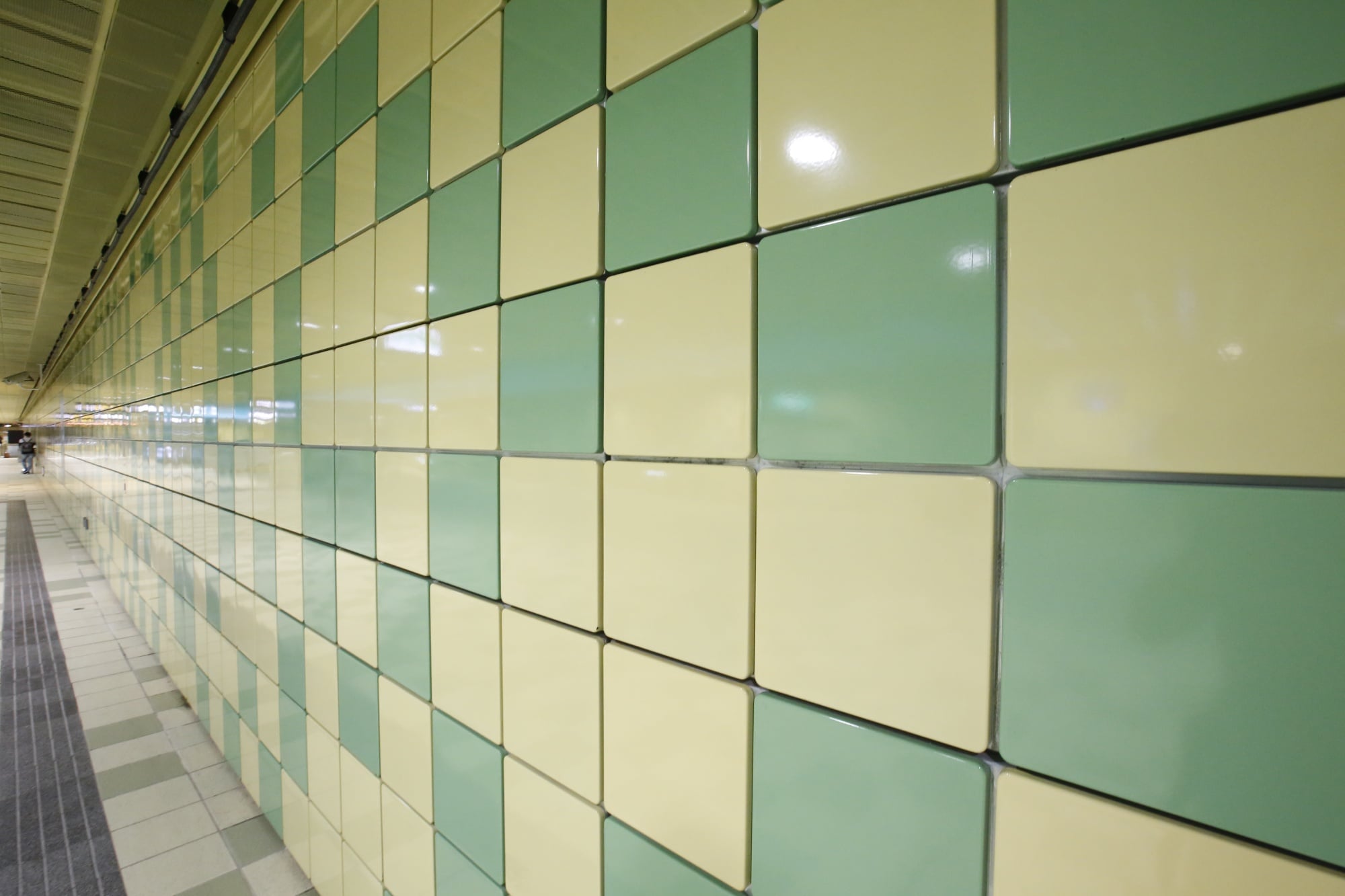
Vitreous enamel has transitioned from a niche specialty to a mainstream specification across European, UK, and Middle Eastern markets. For projects where fire performance, colour permanence, and scratch resistance are non-negotiable, Vitreous enamel represents the gold standard. In the post-Grenfell landscape, Approved Document B compliance has centred facade selection on combustibility; as an inorganic fusion of powdered glass and low-carbon steel, vitreous enamel is one of the few finishes that guarantees an A1 non-combustible rating under EN 13501-1 without compromising aesthetic versatility.
This guide is written for architects, facade consultants, and procurement teams specifying vitreous enamel on commercial, transport, healthcare, and high-security projects. It covers what the material is, why specifiers choose it, how it performs against the certifications that matter, and how Dynamic Cladding’s DynaPanel Vitreous Enamel system integrates into a ventilated rainscreen facade.
Every performance claim in this guide is backed by a named standard, certification, or test result. Where a subtopic deserves deeper treatment — railway applications, lifecycle cost, bespoke finishes — you will find a link to a dedicated page.
Table of Contents
What Is Vitreous Enamel Cladding?
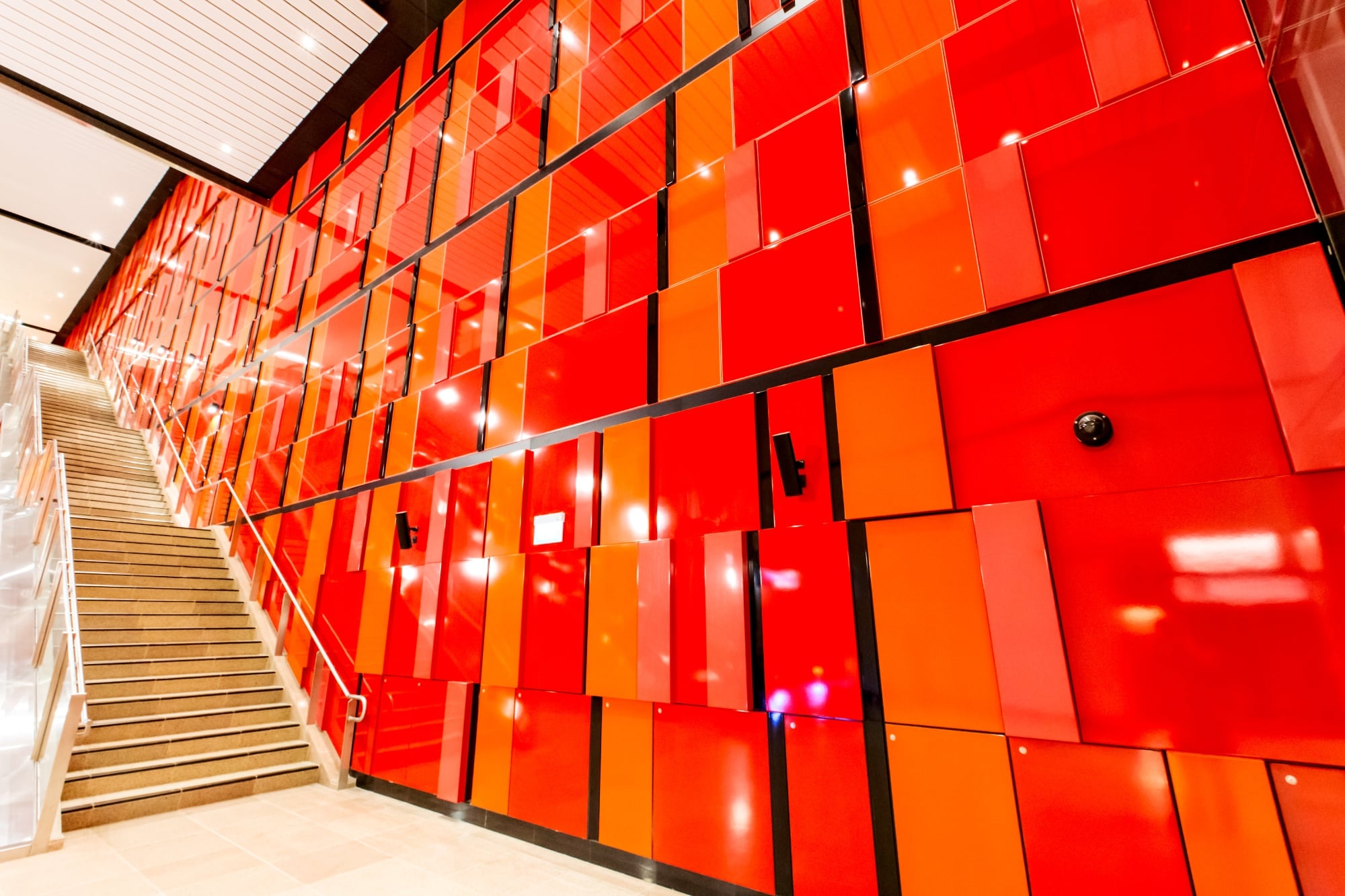
Vitreous enamel cladding is an internal and external facade finish created by fusing powdered glass to a metal substrate — typically steel or aluminium — at temperatures of 800°C and above. The fusion produces an inorganic, non-combustible surface that is chemically bonded to the substrate, not coated onto it. This distinction matters for specification: the finish cannot delaminate, chalk, or fade under UV exposure the way organic paint or polymer coatings can, because the finish is glass.
The process originates in industrial and architectural use dating back more than a century, but the material has evolved significantly. Modern vitreous enamel panels are engineered for interior cladding or ventilated rainscreen cladding applications, with defined thickness tolerances, controlled substrate specification, and finish systems tested to the same performance standards as other facade materials. Dynamic Cladding’s DynaPanel Vitreous Enamel system uses this process to produce panels rated A1 or A2 s1, d0 non-combustible under EN 13501-1, depending on the substrate and finish configuration.
While the low-carbon steel substrate provides the structural strength for a robust, durable solution, the enamel fusion process ensures an elite surface performance. However, the true distinction of the DynaPanel Vitreous Enamel system lies in its integration—the seamless interface between the secret fix panel and the precision sub-framing assembly, creating an open joint, ventilated rainscreen cladding solution that accelerates installation and reduces on-site costs.
Three properties follow directly from the material’s composition. First, it is non-combustible — glass does not burn. Second, it is colour-stable — the pigment is fired into the glass, not applied over it. Third, it is chemically inert — it does not react with airborne pollutants, cleaning agents, or UV, which determines its lifecycle performance on high-value buildings.
Each of these properties are overviewed in the sections that follow.
Why Specifiers Choose Vitreous Enamel Cladding
Vitreous enamel is specified on commercial, transport, and institutional projects because it resolves several performance requirements that most facade materials trade off against each other. The material delivers non-combustibility, colour permanence, chemical resistance, cleanability, and long service life without requiring any one of these to come at the expense of another. Five drivers consistently reoccur in specification decisions.
Fire performance
Vitreous enamel panels are rated A1 or A2-s1,d0 non-combustible under EN 13501-1 depending on the substrate and finish configuration. This makes the material directly compliant with Approved Document B for buildings above 11 metres and suitable for relevant buildings as defined under the Building Safety Act 2022. For specifiers working under post-Grenfell scrutiny, the finish is inherently non-combustible rather than treated to resist combustion.
Colour stability under UV
Because the pigment is fired into the glass layer during manufacture, it is not exposed to UV degradation in the way organic paint or polymer coatings are. Vitreous enamel does not chalk, fade, or yellow over building lifecycles measured in decades. For projects in high-UV environments — Dubai, coastal London, open plazas — this is a specification-defining property.
Chemical and graffiti resistance
The glass surface is chemically inert. It does not react with airborne pollutants, de-icing salts, industrial atmospheres, or common cleaning agents. Graffiti can be removed with standard solvents without damaging the finish. This determines the material’s suitability for publicly accessible surfaces and transport environments.
Cleanability
The non-porous surface requires only water and mild detergent for routine maintenance. There is no sealant, coating, or protective layer to refresh on a service cycle.
Longevity
Fired glass is the finish. It does not wear down, delaminate, or require recoating. Service life on properly specified and installed systems is typically measured in decades rather than years, which determines the material’s position in whole-life cost calculations.
Each of these drivers is treated in more detail in the sections that follow.
Fire and Safety Performance
Fire performance is the specification-defining property for vitreous enamel cladding in the Global regulatory environment. The material is inorganic by composition, a fired glass fused to a metal substrate, this places it in the highest reaction-to-fire classifications under European testing standards without requiring any intumescent treatment, coatings, or fire-retardant additives.
Reaction to fire — EN 13501-1
DynaPanel Vitreous Enamel is classified A1 or A2-s1,d0 under EN 13501-1 depending on the substrate and the finish configuration. A1 is the highest non-combustible classification available under the European standard. A2-s1,d0 denotes limited combustible performance with the lowest smoke production (s1) and no flaming droplets or particles (d0). Both classifications satisfy the non-combustible requirements under Regulation 7(2) of the Building Regulations for external walls on relevant buildings.
Approved Document B and the Building Safety Act 2022
For residential buildings above 11 metres and relevant buildings as defined under the Building Safety Act 2022, external wall materials must achieve a minimum Class A2-s1,d0 or greater (A1) to comply with Approved Document B. Vitreous enamel panels meet this threshold as a matter of material composition. The specification decision therefore does not hinge on test data for a specific build-up — it is supported by the inherent non-combustibility of the finished panel itself.
System-level testing — BS 8414
Where a full facade build-up is required to demonstrate compliance, vitreous enamel rainscreen systems can be tested under BS 8414 and assessed against BR 135 performance criteria. This applies when the specification includes combustible elements elsewhere in the build-up (insulation, membranes, cavity barriers) and the system as installed must be evaluated as a whole.
Blast Resistance — ASIAD, SIDOS, and ISO 16933:2007
For infrastructure, transport, and high-security projects, DynaPanel Vitreous Enamel systems are available with bomb-blast certification tested to ASIAD, SIDOS, and ISO 16933:2007 standards. This is a specification differentiator in environments where facade failure under blast load is a credible threat scenario on airports, rail terminals, government buildings, embassies, and other fire and blast-resistant facade applications across critical infrastructure. Certification is system-specific and the tested result work as a completely tested full solution which includes the fixing method, panel format, and substructure construction.
The evidence above is summary level. Full test certificates, classification reports, and system-specific datasheets are available through Dynamic Cladding’s technical team.
Request technical datasheets, fire classification reports, and blast test certificates for DynaPanel Vitreous Enamel systems. Request Technical Data →
Finishes, Colours, and Bespoke Design
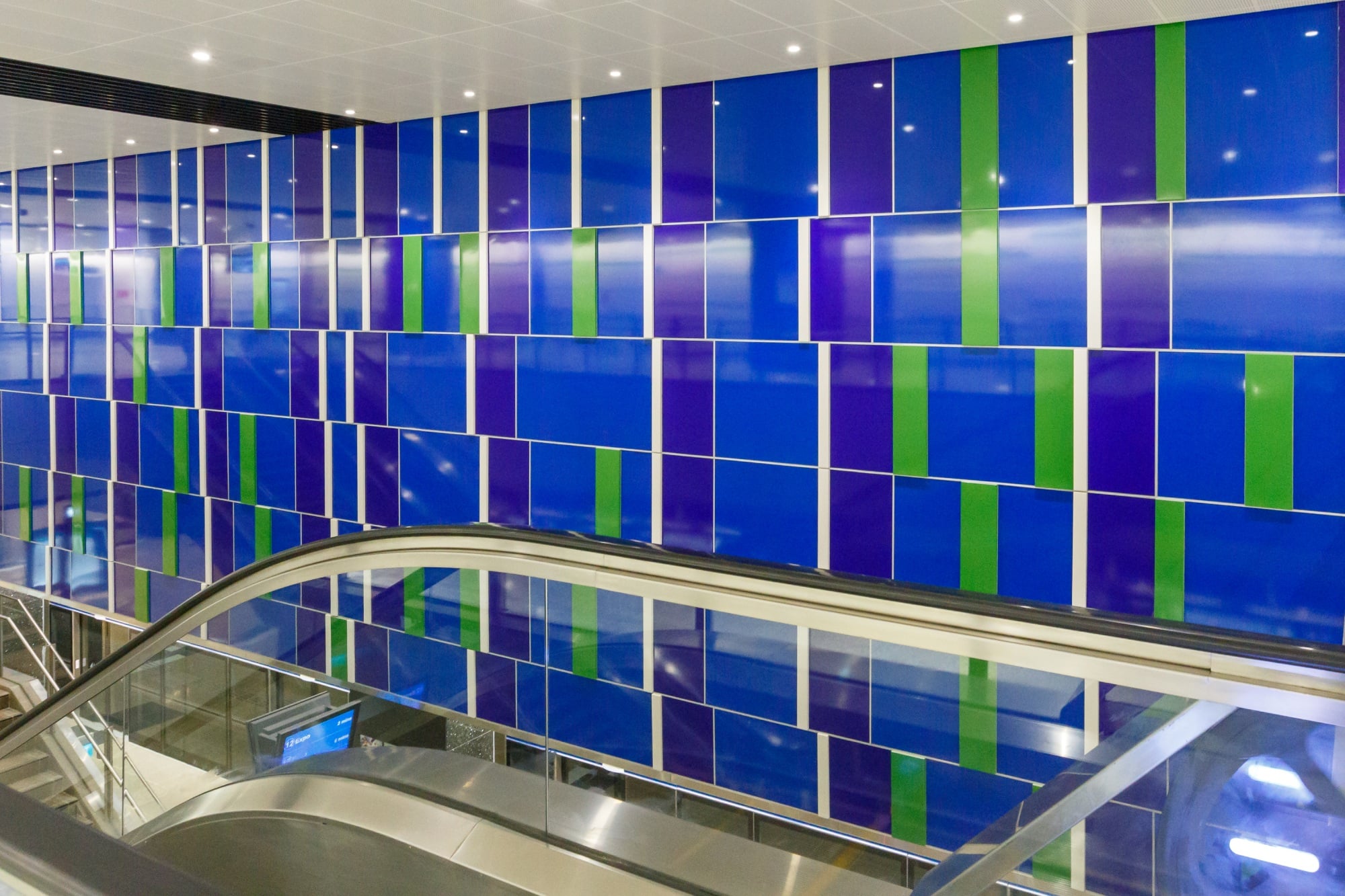
The performance case for vitreous enamel is matched by the breadth of its design range. Because the finish is fired glass with pigment integrated into the enamel layer, the colour and surface treatment are specified at the point of manufacture — not applied afterwards — which expands what is possible for the specifying architect.
Full RAL and Pantone Palette and Metallic Finishes
DynaPanel Vitreous Enamel is produced in the complete Pantone and RAL Design colour ranges, with metallic, pearlescent, and lustre finishes available. Colour matching to bespoke references is supported at a project scale, enabling facade palettes developed to brand, heritage, or contextual requirements rather than constrained to a stock range. Full colour samples and bespoke finish specifications should be requested through the Dynamic Cladding technical support Request Technical Data →
Digital photorealistic printing
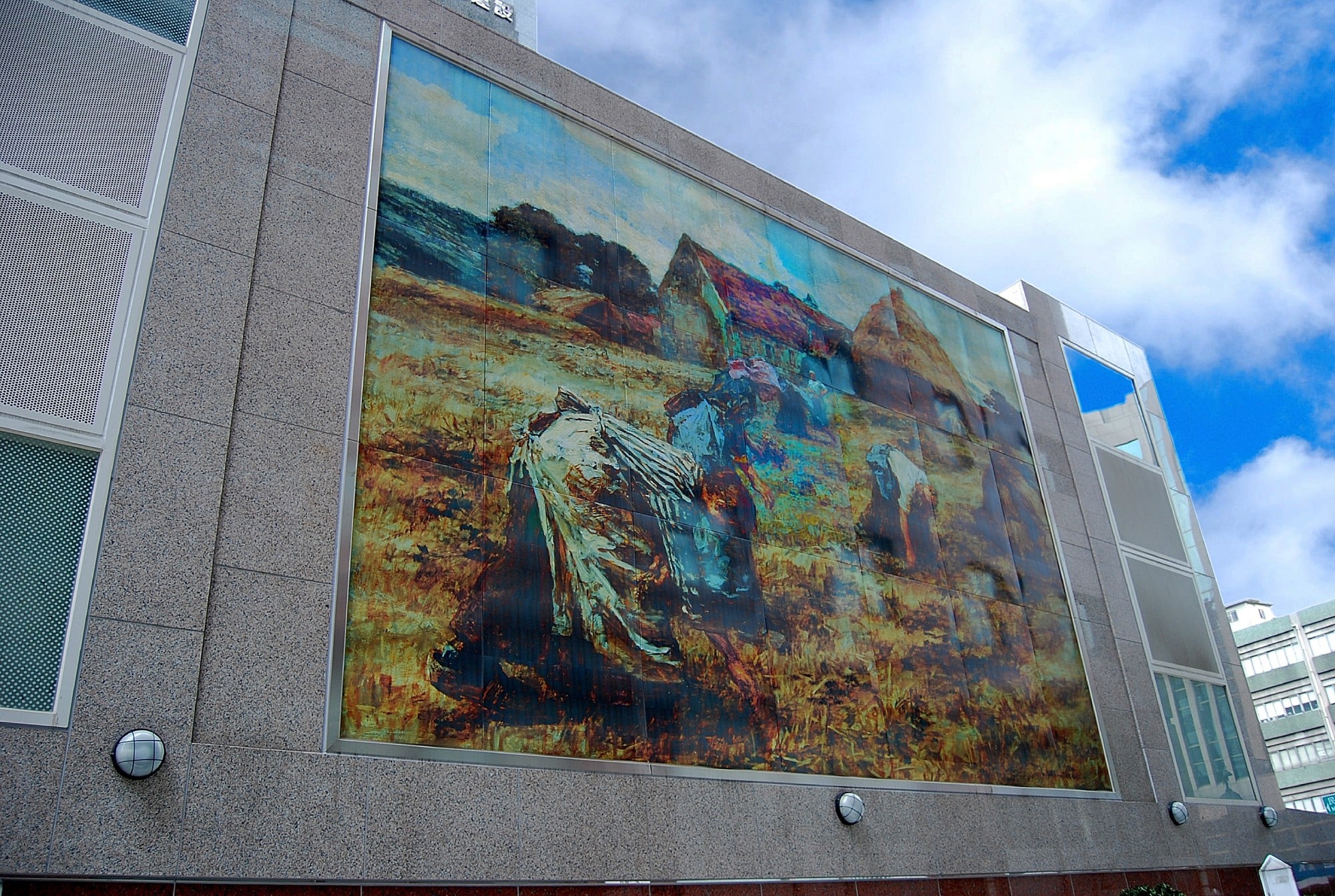
Photographic imagery, graphic artwork, wayfinding, and bespoke visual compositions can be fired directly into the enamel layer. Because the image becomes part of the glass, it carries the same UV stability, chemical resistance, and longevity as a solid colour panel. This enables feature facades, public art integration, and heritage reproductions without the lifecycle compromises of printed substrates or applied graphics.
Surface texture and finish
Matt, satin, gloss, and textured finishes are specified at the manufacture point. Anti-glare and anti-reflective specifications are available for projects where sightline and luminance control are part of the brief and used on transport interchanges, gallery spaces, aviation-adjacent buildings and hospital applications.
CNC-engineered precision
Panel cutting, edge treatment, and perforation patterns are produced on CNC equipment to tolerances suitable for specification-grade facade work. Custom panel formats, cut-outs for integrated lighting or signage, and perforated acoustic or decorative patterns are produced to drawings without site-level modification.
Design intent without specification compromise
The design range is the point at which vitreous enamel differentiates most clearly from other A1 and A2 non-combustible finishes. Specifiers do not trade fire performance for aesthetic range — both are delivered by the same material.
Vitreous Enamel Panels vs. Other Rainscreen Materials
Specifying vitreous enamel is rarely a standalone decision. On most projects, the material is evaluated against a shortlist of rainscreen alternatives — aluminium composite (the most consequential comparison post-Grenfell and covered in detail on its own page), high-pressure laminate (HPL), through-coloured cement board, and natural stone rainscreen systems. Each material resolves the facade brief differently, and the comparison below frames where vitreous enamel leads and where another material may be the right answer.
The decision typically turns on four factors: fire performance, weight and structural load, colour and finish stability, and long-term maintenance. These are the properties that shape both the specification argument and the whole-life cost calculation.
| Property | Vitreous Enamel | Aluminium Composite (A2-grade) | HPL | Through-Coloured Ceramic | Natural Stone |
|---|---|---|---|---|---|
| Reaction to fire (EN 13501-1) | A1 / A2-s1,d0 | A2-s1,d0 (non-FR grades are combustible) | B-s1,d0 typical; A2 variants exist | A1 / A2-s1,d0 | A1 |
| Weight | Moderate (substrate-dependent) | Low | Low | Moderate–high | High |
| Colour stability under UV | Inherent — pigment fired into glass | Coating-dependent; risk of chalking | Surface decor layer; fade-resistant but finite | Inherent — fired ceramic | Natural variation; weathering over time |
| Chemical and graffiti resistance | High — inert glass surface | Moderate — coating-dependent | Moderate | High | Variable by stone type; porous stones absorb |
| Bespoke finish range | Full RAL, metallic, photorealistic print | Broad colour range, limited print | Broad decor and woodgrain range | Limited colour range, texture-led | Natural only — no custom colour |
| Maintenance | Water and mild detergent | Periodic coating inspection | Surface cleaning; replacement if damaged | Water and mild detergent | Sealing and periodic restoration |
| Typical applications | Transport, healthcare, education, high-security, commercial | Commercial facades, mid-rise residential | Commercial, education, residential | Transport, commercial | Heritage, premium commercial, institutional |
Where vitreous enamel leads most clearly is on the combination of A1/A2 fire performance with inherent UV-stable colour and chemical resistance, a set of properties that other materials deliver individually but rarely together. For projects where the facade must hold its finish for decades under UV, pollutant, and cleaning exposure, and must do so and meet fire compliance, the material is difficult to substitute.
Where other materials lead: natural stone on heritage and material authenticity, HPL on cost-constrained low-rise projects, aluminium composite on lightweight large-format applications where A2-grade product is specified, and through-coloured cement board on projects prioritising a low cost and specific texture-led aesthetic.
Typical Applications and Project Types
Vitreous enamel cladding is specified where the facade must hold its finish under sustained exposure — to pollutants, UV, cleaning regimes, and public interaction — and where non-combustibility is a regulatory requirement rather than a specification preference. Five project types recur.
Transport infrastructure
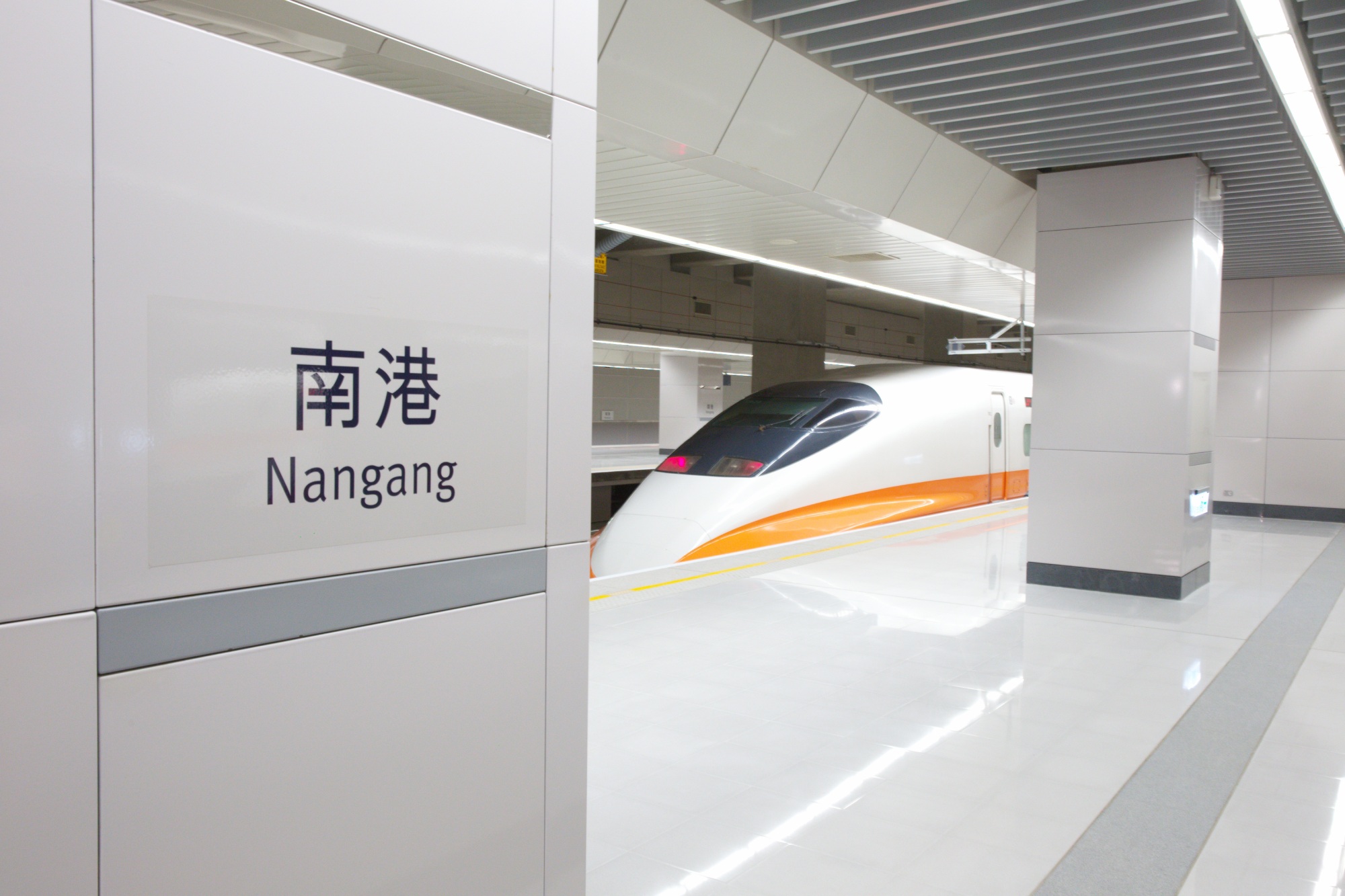
Rail stations, airport terminals, metro interchanges, and bus stations specify vitreous enamel for the combination of A1/A2 fire performance, graffiti resistance, and cleanability. Where the specification also calls for blast resistance — common in rail and aviation environments, and treated in depth in the guide to vitreous enamel cladding for railway stations (link to activate on cluster publication) — DynaPanel systems tested to ISO 16933:2007 address that requirement within the same product family.
Healthcare and education
Hospital estates and education buildings specify for chemical resistance, cleanability, and long service life. The finish tolerates clinical cleaning regimes and high-traffic wear without coating degradation, which affects both infection control protocols and estate maintenance cycles.
Commercial facades in London and Dubai
On commercial and mixed-use developments in both primary markets, the material is specified where the facade brief requires A1/A2 compliance under Approved Document B or equivalent UAE fire regulations, and where the design team is committed to a defined colour or finish that must hold across the building’s service life. The Dubai market in particular drives specification on UV stability — organic coatings degrade measurably faster under Gulf UV and heat exposure.
High-security and public infrastructure
Government buildings, embassies, courts, and critical infrastructure projects specify vitreous enamel where the combination of non-combustibility and blast certification is non-negotiable. The ISO 16933:2007 certification is the differentiating factor on this project type.
High-end residential
On premium residential developments — particularly in London post-Grenfell and in Dubai’s luxury tower segment — specification increasingly defaults to A1/A2 materials. Vitreous enamel’s design range makes it viable where aesthetic ambition would otherwise push specifiers toward materials with weaker fire performance.
System Design and Installation
DynaPanel Vitreous Enamel panels function as the outer leaf of a high-performance ventilated rainscreen. Designed to shield the building’s structural and thermal layers from the elements, this multi-layer assembly is the critical link that turns a non-combustible panel into a complete, fire-safe facade system.
System architecture
The ventilated rainscreen assembly comprises of five components: the vitreous enamel outer panel, a mechanical fixing method (secret-fix or visible-fix depending on specification), a support subframe fixed back to the structural wall, a drained and pressure-equalised cavity, and the inner build-up of non-combustible insulation, cavity barriers, and a breather membrane where required. The cavity is the working element, it equalises wind pressure, drains incidental moisture through circular convection, and ventilates the insulation layer.
Fixing methods
DynaPanel Vitreous Enamel supports both concealed secret-fix and mechanical visible-fix systems, specified according to building height, exposure zone, and aesthetic intent. Secret-fix systems deliver a flush facade with no visible fasteners and open joints; mechanical fix systems display a fixing point with their visual effect.
Certification and compliance
System-level compliance is demonstrated against EOTA (European Organisation for Technical Assessment) guidance for ventilated facades and CWCT (Centre for Window and Cladding Technology) performance standards for wind load, impact resistance, and water penetration. Where BS 8414 full-scale fire testing is required for the completed build-up, test evidence is provided for the specific system configuration rather than the panel alone.
Prefabrication and programme
The panels are manufactured to project-specific cutting schedules before delivery to site. CNC-produced panel formats, pre-cut service penetrations, and factory-applied fixings reduce on-site cutting and adjustment. For projects where the programme is a specification constraint, like on commercial developments targeting an occupancy date or transport projects working within possession windows, the prefabricated element of the system can reduce the facade installation timeframe.
Technical support from design to installation
Dynamic Cladding’s technical team supports the specification from early design through to site installation: system selection, fixing strategy, interface detailing, and installer coordination. This is the operational answer to the programme and complexity risks that specifiers carry on high-value projects.
Durability and Lifecycle Performance
On commercial, institutional, and infrastructure projects, the material decision is ultimately a whole-life decision. The upfront specification cost is one input; the cost of holding the facade’s appearance and compliance across the building’s service life is the other. Vitreous enamel is specified on projects where that second input is weighted heavily.
Service life
Properly specified and installed vitreous enamel rainscreen systems carry service lives measured in decades rather than years. The limiting factor on service life is rarely the enamel panel system itself, as fired glass does not degrade under normal environmental exposure.
Weathering and UV exposure
Because the colour pigment is fired into the glass layer, there is no organic binder to degrade under UV. The finish does not chalk, fade, or yellow. On Gulf-exposure projects in Dubai and on south-facing London facades, this property materially affects whether the building holds its intended appearance at year 20 and beyond.
Pollutant and chemical exposure
The glass surface is chemically inert. It is unaffected by acid rain, urban pollutants, de-icing salts, or airborne contaminants. Graffiti and surface marking are removed with standard solvents without damage to the finish.
Maintenance
Routine cleaning is water and mild detergent solution. There is no recoating cycle, no sealant refresh on the panel face, no protective layer to renew. Inspection is focused on the system components, the fixings, subframe, interface sealants, rather than the panel finish.
Whole-life cost
The combination of extended service life, minimal maintenance, and resistance to finish degradation shapes the whole-life cost case for vitreous enamel against alternatives with shorter refresh cycles or higher routine maintenance demand, this is treated in detail in the lifecycle cost effectiveness of vitreous enamel cladding analysis.
Sustainability and Thermal Performance
Sustainability credentials are increasingly part of the specification argument, not an afterthought. On commercial and public-sector projects in particular, facade material decisions now sit alongside embodied carbon disclosure, operational energy modelling, and end-of-life planning. Vitreous enamel performs on each of these considerations for material reasons, not marketing reasons.
Inorganic composition
The finish is glass fused to metal — no VOCs, no organic binders, no off-gassing. The material is chemically stable across its service life and does not release airborne compounds under UV, thermal, or chemical exposure. This affects both indoor air quality assessments on buildings where the facade interfaces with ventilated atriums and the embodied carbon profile across the panel’s service life.
Recyclability
Built for the circular economy, our panel systems are 100% recyclable. The inert enamel finish does not contaminate the metal recovery process, allowing both steel and aluminium substrates to be seamlessly repurposed. By prioritizing disassembly over disposal, this system provides a clear pathway to achieving BREEAM, LEED, and Estidama credits for sustainable cladding material selection.
Thermal performance through the ventilated system
Vitreous enamel panels are specified within ventilated rainscreen assemblies, which deliver thermal performance through the full system rather than the panel alone. The ventilated cavity reduces solar gain to the structural wall, the continuous insulation layer minimises thermal bridging, and the pressure-equalised cavity manages moisture without compromising insulation performance. This contributes directly to operational energy reduction across the building’s service life.
Lightweight systems and transport emissions
Where Vitreous Enamel is specified, the resulting panel weight is lower than traditional stone or some alternatives. This reduces structural load, crane and lifting requirements on site, and transport emissions per square metre of installed facade.
Certifications and Compliance
For specifiers building an evidence pack for internal sign-off, regulatory submission, or tender response, the certifications below summarise the compliance framework that applies to DynaPanel Vitreous Enamel systems. Each is referenced throughout the sections above and covered in depth on the named pages of the technical library.
Reaction to fire
EN 13501-1 — the European classification standard for reaction to fire performance. DynaPanel Vitreous Enamel is classified A1 or A2-s1,d0 depending on the finished panel configuration.
UK regulatory compliance
Approved Document B of the Building Regulations — governs external wall construction on relevant buildings. Vitreous enamel meets the Class A2-s1,d0 or better threshold required for buildings above 11 metres. Building Safety Act 2022 — defines the higher-risk building regime and the duties on designers, contractors, and building owners.
System-level fire testing
BS 8414 — the UK standard for full-scale fire testing of external cladding systems. Applicable where the complete facade build-up must be assessed. BR 135 — the performance criteria against which BS 8414 test results are evaluated.
System assessment and performance
EOTA — European Organisation for Technical Assessment guidance for ventilated facade systems. CWCT Centre for Window and Cladding Technology standards for wind load, impact resistance, and water penetration.
Blast resistance
ISO 16933:2007 — international standard for glazed and non-glazed facade elements tested against blast loads. ASIAD and SIDOS — additional blast testing protocols applicable to specific threat scenarios and infrastructure environments.
Full certification documents, classification reports, and system-specific test evidence are available to specifiers on request.
Request technical datasheets, fire classification reports, and blast test certificates for DynaPanel Vitreous Enamel systems. Request Technical Data →
Specifying Vitreous Enamel Systems with Dynamic Cladding
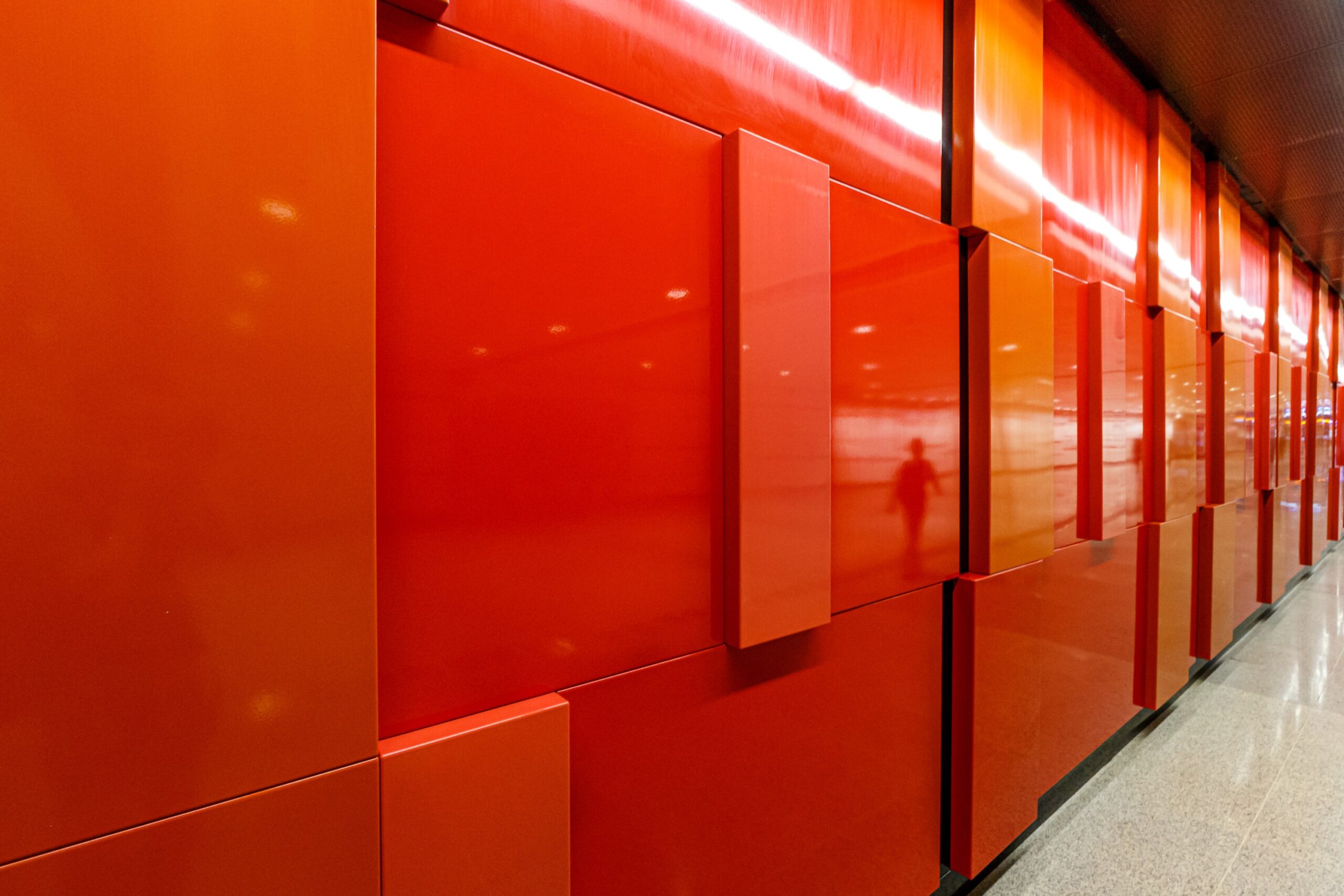
Dynamic Cladding manufactures and supplies DynaPanel Vitreous Enamel systems for commercial, transport, healthcare, institutional, and high-security projects across the UK, the UAE, and international markets. The product family covers A1 and A2-s1,d0 rated panels, bomb-blast certified systems tested to ISO 16933:2007, and the full architectural finish range from RAL and Pantone colour-matched panels to digital photorealistic printed images.
Concept to installation support
The technical team engages at the stage the specification benefits most, typically the early design, stage when system selection, substrate specification, and interface detailing determine what is achievable without redesign later. Support continues through tender documentation, sample production, installer coordination, and site-level technical resolution during installation.
Project context
DynaPanel Vitreous Enamel systems are specified on transport infrastructure including rail and aviation environments, on public sector estate across healthcare and education, and on commercial and high-end residential developments globally. The blast-certified variants are deployed where the threat scenario and regulatory environment require it.
Specification evidence
Full certification documents, classification reports, system-specific test evidence, and CAD/BIM detailing are available through the technical team. Sample panels in project-specific colours and finishes are produced on request for material approval.
What a specification consultation covers
Our 45-minute technical call is designed to translate your project brief into a high-performance specification. We cover critical fire, blast, and environmental criteria while vetting substrate and fixing compatibility. The result is a comprehensive specification shortlist supported by technical data. This consultation is purely advisory, delivering a strategic foundation for your project rather than a sales estimate.
Book a specification consultation with Dynamic Cladding’s technical team to review vitreous enamel options for your project. The consultation is scoped to deliver a specification basis document, not a sales conversation. Book a Specification Consultation →
Frequently Asked Questions
What are vitreous enamel panels made of?
Vitreous enamel panels consist of a metal substrate — typically steel or aluminium — with a layer of powdered glass fused to the surface at temperatures of 800°C and above. The fusion creates a chemical bond between the glass and the metal, producing an inorganic, non-combustible finish. Pigment is integrated into the glass layer during manufacture, not applied as a separate coating.
Is vitreous enamel cladding fire rated?
Yes. DynaPanel Vitreous Enamel is classified A1 or A2-s1,d0 under EN 13501-1, depending on substrate and finish configuration. These are the highest non-combustible classifications available under the European reaction-to-fire standard and meet the requirements of Approved Document B for external walls on relevant buildings above 11 metres.
How does vitreous enamel compare to aluminium composite cladding?
Both materials are available in A2-s1,d0 rated formats, but vitreous enamel’s fire performance derives from its inorganic composition — glass fused to metal — rather than from fire-retardant core specification. Vitreous enamel also delivers inherent UV-stable colour because pigment is fired into the glass, whereas aluminium composite relies on applied coatings that can degrade over time.
What is the typical lifespan of vitreous enamel cladding?
Service life on properly specified and installed systems is measured in decades rather than years. The fired glass finish does not chalk, fade, or degrade under UV, chemical, or weather exposure. The limiting factors on total system life are typically the supporting components — fixings, subframe, and interface sealants — rather than the enamel itself.
Can vitreous enamel panels be produced in bespoke colours and finishes?
Yes. DynaPanel Vitreous Enamel is produced in the full RAL Classic and RAL Design colour ranges, with metallic, pearlescent, matt, satin, gloss, and textured finishes. Digital photorealistic printing is fired directly into the enamel layer, enabling photographic imagery, graphic artwork, and heritage reproductions with the same durability as solid colour panels.
Where is vitreous enamel cladding typically specified?
Transport infrastructure (rail stations, airport terminals, metro interchanges), healthcare estate, education buildings, commercial facades in London and Dubai, high-security and public infrastructure projects, and high-end residential developments post-Grenfell.