A rainscreen cladding system is an external wall assembly where a weather-facing panel is mounted over a ventilated cavity and an insulation layer, protecting the building fabric while managing moisture, thermal performance, and fire safety.
For UK architects and specifiers, the question post-Grenfell is no longer whether to specify a rainscreen — it is which system can demonstrate the certification, performance, and technical support a modern commercial project demand. This guide covers what a rainscreen cladding system is, the materials available, the UK compliance landscape, and what to look for when specifying one. Each section links out to deeper cluster content where needed.
If you are already specifying a system for a live project, you can book a specification consultation with our technical team.
Table of Contents
What Is a Rainscreen Cladding System?
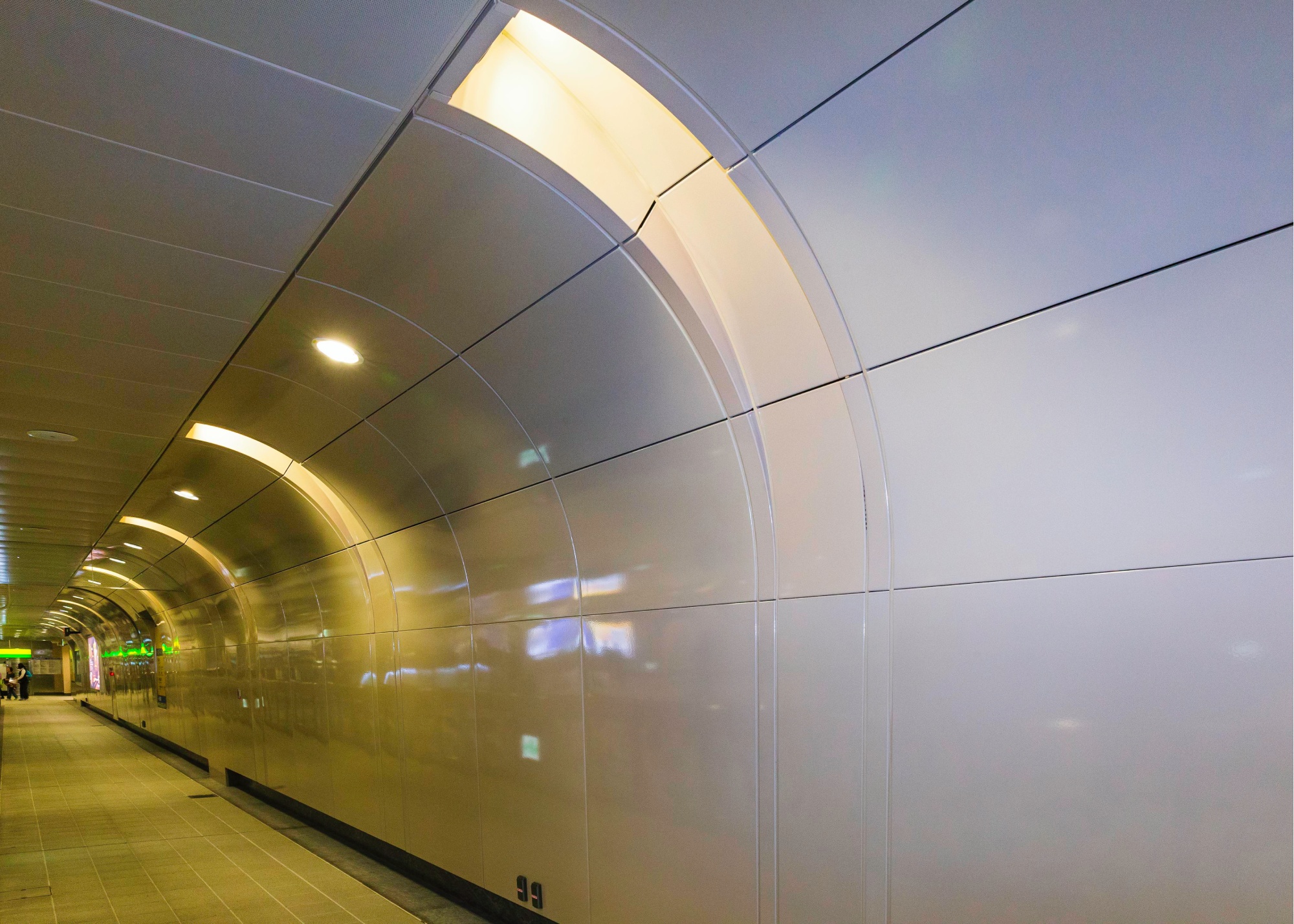
A rainscreen cladding system is a multi-layered external wall construction with four functional components working together:
- The structural substrate — the load-bearing wall behind the facade (concrete, blockwork, masonry, timber, or steel framing)
- Thermal insulation — specified to meet the project’s Part L and U-value requirements
- A ventilated cavity — an open air gap between the insulation and the outer panel, typically drained and back-ventilated
- The rainscreen panel — the visible, weather-facing outer layer in stone, glass, vitreous enamel, metal, or composite material, fixed to a sub-frame of brackets and carrier rails
The defining feature is the cavity. Unlike traditional wet-build cladding, where a single layer bonds directly to the substrate, a rainscreen system separates the weather-facing panel from the structure. The cavity does three things at once: it drains any water that penetrates the outer panel before it reaches the insulation, it allows back-ventilation that dries the cavity and regulates temperature, and it accommodates the differential thermal movement between the panel and the structure.
The Dynamic Cladding DynaPanel system build-up — substrate, insulation, aluminium wall bracket, T-profile, carrier rail, hanger rail, and the prefabricated panel itself — is documented in full on our technical performance page.
How a Ventilated Facade Works
The cavity is pressure-equalised by design. When wind drives rain against the outer panel, a proportion of water will always penetrate through the open joints between panels — this is expected behaviour, not a defect. The cavity then functions as a drainage and evaporation zone: water runs down the back of the panel and exits at designed weep points, while continuous airflow from bottom to top dries residual moisture before it can reach the insulation or substrate.
This is why rainscreen systems outperform traditional sealed cladding on long-term building fabric protection. The insulation stays dry, thermal performance holds over the building’s lifecycle, and the structural substrate is protected from freeze-thaw damage, moisture ingress, and the interstitial condensation that causes premature failure in sealed wall constructions.
For commercial specifiers, the thermal implications are equally important. The continuous insulation layer eliminates the cold bridging associated with traditional cladding fixings, and the ventilated cavity reduces solar heat gain on south and west elevations — both of which support compliance with Approved Document L and ESG performance targets on new-build and retrofit projects.
Is a Rainscreen Cladding System Necessary?
Whether a rainscreen is the right specification depends on the building type, height, regulatory context, and performance requirements. For a significant portion of UK commercial and public sector projects, a certified rainscreen system is either explicitly required or the only practical route to meeting current Building Regulations.
Projects Where a Rainscreen Is Effectively Required
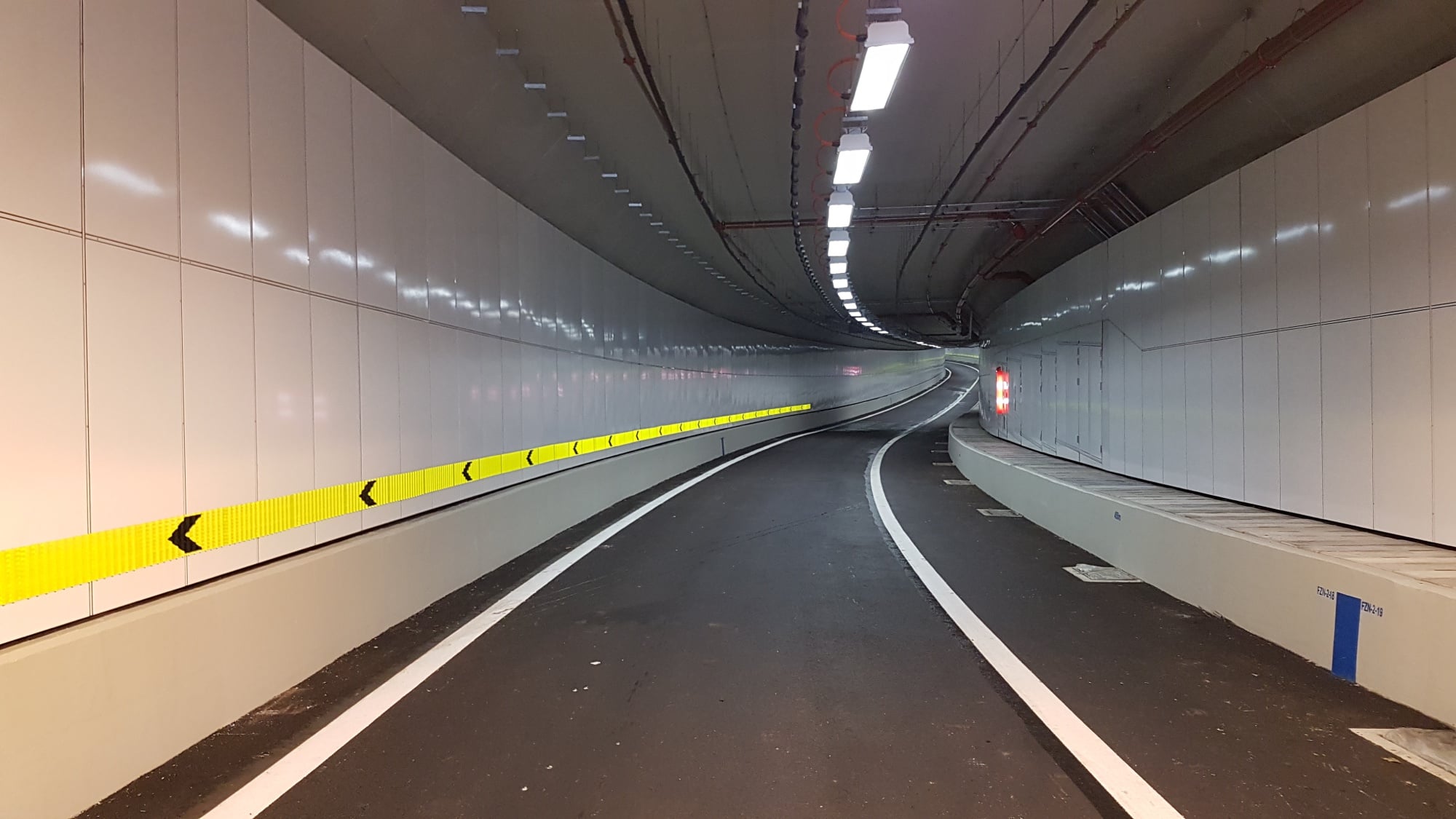
A rainscreen cladding system is the default specification on:
- Residential buildings over 18m in England, where Approved Document B restricts the combustibility of external wall materials and a non-combustible ventilated facade is the clearest compliance route
- Public sector and infrastructure projects — hospitals, schools, transport hubs, and government buildings — where procurement specifications now require A1 or A2 Non-Combustible cladding to EN13501-1
- High-security buildings — airports, rail stations, embassies, and critical infrastructure in London and Dubai — where blast-resistance certification is a tender requirement
- Heritage retrofits where the structural substrate cannot accept the additional load of traditional stone cladding, and a lightweight system like DynaPanel Stone (up to 50% lighter than solid stone with identical aesthetics) becomes the viable option
- Commercial developments targeting BREEAM, LEED, or Net Zero performance, where continuous insulation and cavity-driven thermal performance are specified from RIBA Stage 2
Projects Where a Rainscreen May Not Be the Right Fit
A rainscreen is not universally the correct specification. It is rarely used on:
- Low-rise domestic buildings where cost, specification complexity, and planning constraints favour traditional render or brick
- Projects with a fixed construction budget that cannot absorb the higher upfront material cost (though this is routinely offset by lifecycle performance and faster installation — covered later in this guide)
- Heritage contexts where planning permission restricts any visible modern intervention on the facade
For any project where external wall performance, fire certification, or long-term durability are material to the specification, a ventilated rainscreen system is almost always the correct answer. The more useful question for most specifiers is not whether to specify a rainscreen, but which system and material best fits the project’s aesthetic, structural, and compliance requirements — the subject of the next section.
Rainscreen Cladding Materials and System Types
Rainscreen cladding materials fall into a handful of distinct families, each with its own structural, aesthetic, and compliance profile. The right specification depends on the architectural intent, the building’s performance requirements, and the project’s budget and programme. Below is an overview of the main material categories.
Stone Rainscreen Cladding

Natural stone delivers a premium, enduring aesthetic that signals permanence and architectural weight — qualities that carry significant commercial value on high-end residential, hospitality, and landmark commercial developments. Traditional solid stone cladding, however, carries three well-documented specification challenges: structural load on the substrate, transport and handling cost, and slow on-site installation.
Engineered natural stone rainscreen cladding systems resolve these constraints without compromising the finish. DynaPanel Stone panels are up to 50% lighter than traditional solid stone while presenting the identical natural stone face — marbles, limestones, granites, and travertines in their full range of quarry finishes. The weight reduction lowers structural load on the substrate (critical for retrofit and high-rise projects), supports the sustainable cladding materials case by reducing transport emissions, and speeds installation through prefabrication.
On fire certification, DynaPanel Stone is rated A2-s1,d0 Non-Combustible to EN13501-1 — a specification advantage over many traditional stone cladding systems where the back-fixing and bonding method introduces combustible components into the wall build-up.
Glass Rainscreen Cladding

Glass rainscreen cladding offers aesthetic flexibility that few other materials can match. Back-painted glass delivers any RAL or metallic colour with the depth and finish quality of a polished surface, while digital photorealistic printing allows high-resolution images or custom graphics to run across multiple panels, full elevations, and around corners — a specification capability increasingly used on retail, hospitality, and cultural buildings.
The key specification distinction is between glass rainscreen and curtain walling. A glass rainscreen is an opaque outer skin mounted over a ventilated cavity and insulation — it is a facade finish. A curtain wall is a glazed, weather-sealed structural system where the glass itself is the weather barrier. The two are not interchangeable, and they answer different design questions. A rainscreen gives the architect opaque, solid-wall elevations with glass aesthetics; a curtain wall delivers transparency and daylight.
DynaPanel Glass is rated A1 Non-Combustible to EN13501-1 — the highest fire classification available — which makes it suitable for elevations on residential buildings over 18m and public sector projects with strict non-combustibility requirements.
Vitreous Enamel Rainscreen Cladding
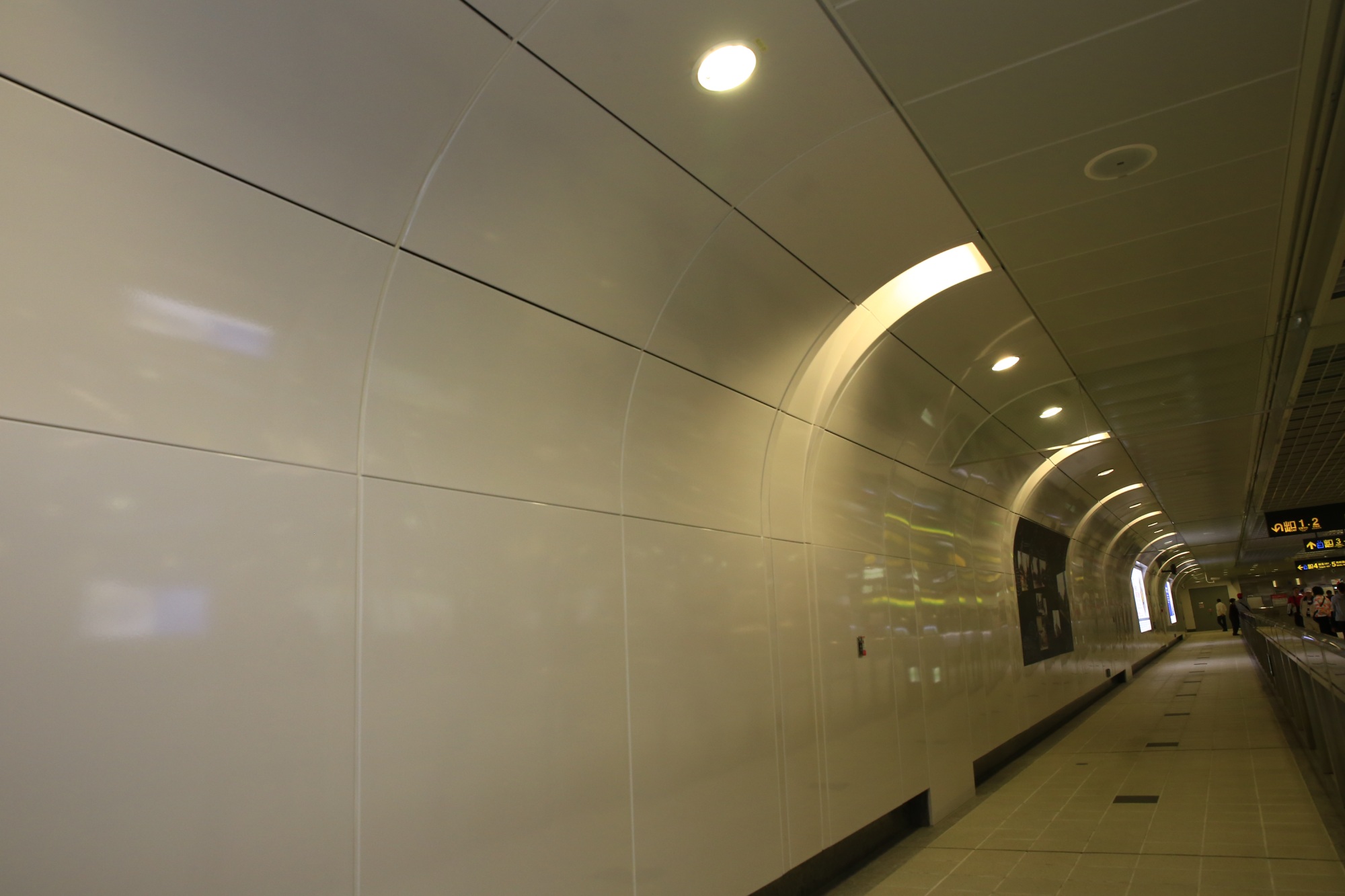
Vitreous enamel is a glass fused to a steel substrate at high temperature, producing an outer surface that is simultaneously colour-stable, UV-stable, graffiti-resistant, and chemically inert. For transport infrastructure, healthcare, and education projects — where colour fade, cleaning cycles, and long-term maintenance cost are material to the specification — vitreous enamel is often the most durable material available.
DynaPanel Vitreous Enamel panels are produced in the full RAL and metallic palette, accept digital photorealistic printing, and are rated A1 Non-Combustible to EN13501-1. The finish does not degrade under UV exposure, does not require repainting over the building’s lifecycle, and wipes clean without specialist cleaning products.
For public sector procurement managers running lifecycle cost analysis, this combination — premium aesthetic, A1 fire rating, zero repainting cost over a 40+ year service life — typically outperforms painted metal and composite alternatives on whole-life value.
Metal, HPL and Composite Rainscreen Options
The wider UK rainscreen market includes aluminium, zinc, copper, steel, high-pressure laminate (HPL), and fibre cement panel systems. Each has a legitimate specification window — aluminium on commercial projects where cost and lead time dominate, zinc and copper on architectural projects where patina and tone are the design intent, HPL on education and lower-rise residential projects where budget and specification speed are priorities.
Since the Grenfell Tower fire and the subsequent Building Safety Act 2022, the UK specification landscape has tightened significantly around metal composite materials (ACM) and combustible insulation pairings. Specifiers should confirm that any composite system carries current A1 or A2-s1,d0 certification to EN13501-1, full ETA approval, and BS8414 test evidence for the specific system build-up — not the panel in isolation.
Dynamic Cladding specialises in stone, glass, and vitreous enamel rainscreen systems where our certification position, customisation capability, and technical support offer a clear specification advantage. For projects where a different material is the right answer, we can still support the specification process and advise on compatible sub-framing — book a specification consultation to discuss the brief.
Fire Safety and UK Compliance for Rainscreen Cladding
Fire safety is the single most scrutinised aspect of any UK facade specification. The Grenfell Tower tragedy in 2017 triggered the most significant overhaul of building safety regulation in a generation, and every specifier working on residential, public sector, or commercial projects over 18m now operates under a compliance framework that demands documented, certified non-combustibility — not assumptions, not marketing claims.
Is Rainscreen Cladding Now Illegal in the UK?
No. Rainscreen cladding itself is not illegal, and certified non-combustible rainscreen systems remain the default specification on the majority of UK commercial and public sector projects.
What has changed is the range of materials permitted on specific building types. Amendments to the Building Regulations — specifically Approved Document B (Volume 1 and Volume 2) and the Building Safety Act 2022 — restrict the use of combustible materials in the external walls of residential buildings over 18m, and in some cases over 11m. This restriction targets combustible panel cores (most notably polyethylene-cored ACM) and combustible insulation pairings. Compliant non-combustible rainscreen systems — including stone, glass, and vitreous enamel panels rated A1 or A2-s1,d0 to EN13501-1 — are fully legal and widely specified.
The practical effect for specifiers is that every external wall component now needs documented fire classification, and the system as installed needs evidence of compliance — not just the individual panel.
Approved Document B and the Building Safety Act 2022
Approved Document B is the UK statutory guidance governing fire safety in building design. For external walls on relevant buildings, it sets out:
- Minimum fire classification requirements for all materials in the external wall build-up (panel, insulation, cavity barriers, membranes, and fixings)
- Height-based restrictions on the use of combustible materials
- Requirements for full-scale system fire testing where non-combustibility cannot be demonstrated by classification alone
The Building Safety Act 2022 added a layer of accountability by introducing the Gateway regime for higher-risk buildings and requiring a named dutyholder to retain evidence of compliance across the project lifecycle. For specifiers, this means certification documentation is no longer a marketing asset — it is a legal audit trail that must be retained and demonstrable.
Fire Classification: What A1 and A2-s1,d0 Actually Mean
European fire classification for construction products is defined by EN13501-1. The two classifications relevant to non-combustible rainscreen cladding are:
- Class A1 — the highest possible rating. The material makes no contribution to fire at any stage, produces no smoke, and generates no flaming droplets. Required on the most fire-sensitive specifications.
- Class A2-s1,d0 — non-combustible with a very limited contribution to fire. The “s1” indicates minimal smoke production; the “d0” indicates no flaming droplets. Acceptable on the majority of regulated buildings, including residential over 18m.
Specifiers evaluating systems should verify that the certification applies to the specific product being supplied, not a generic product family, and that the test report is current. Dynamic Cladding’s full certification summary — including the specific EN13501-1 classifications for DynaPanel Glass, Stone, and Vitreous Enamel — is documented on our technical performance page.
BS8414 and BR135: System Testing, Not Just Material Testing
EN13501-1 classifies individual materials. BS8414 tests the system as a whole — a full-scale, fire-loaded facade mock-up designed to demonstrate that the assembled build-up (panel, cavity, insulation, sub-frame, cavity barriers) performs as a system under fire conditions. A system passes BS8414 if it meets the performance criteria set out in BRE 135.
For residential buildings over 18m, BS8414 / BR135 system test evidence is a near-universal specification requirement. Specifying an A1-classified panel is not sufficient on its own — the specifier needs evidence that the complete system build-up has been tested to BS8414.
Dynamic Cladding DynaPanel systems carry full European Technical Approvals (ETA) covering the complete sub-framing support structure, not just the panels in isolation. This is the specification-level distinction procurement managers and specifiers should verify on every facade tender.
Blast-Resistant Rainscreen Systems for High-Security Projects
For airports, rail stations, embassies, government buildings, and critical public infrastructure, fire compliance is only one of two primary safety requirements. Blast resistance is increasingly specified in tender documentation for high-security projects in London and Dubai.
Dynamic Cladding DynaPanel systems have been tested and certified to the highest ASIAD and SIDOS blast certification requirements, and have withstood loads of an Average Peak Pressure of 590kPa and an Average Positive Phase Impulse of 710kPa-ms under ISO 16933:2007 International Standards. The certification covers the complete system including sub-framing, not the panels alone — the distinction that matters when blast performance is a tender requirement.
Systems with this level of certification are suitable for airports, rail and underground stations, embassies, and public spaces globally. For projects where blast resistance is part of the specification, the full fire and blast resistant cladding guide covers the certification landscape in detail, and the blast certification test data is available on our technical page.
For any specifier working on a project where fire certification or blast resistance is material to the brief, we recommend you request technical data for the relevant system at the earliest specification stage.
What Are the Disadvantages of Rainscreen Cladding?
No specification is without trade-offs, and specifiers doing proper due diligence should understand where rainscreen cladding costs more, takes longer, or demands more careful detailing than the alternatives. The disadvantages are real — but on most commercial and public sector projects, they are outweighed by lifecycle performance, compliance certainty, and installation speed. Here is an honest assessment.
Higher Upfront Material Cost Than Traditional Render
A certified rainscreen cladding system carries a higher capital cost per square metre than traditional render, brick, or basic painted cladding. This is an unavoidable specification reality.
The cost difference narrows — and often reverses — when evaluated on whole-life basis. Rainscreen systems require no repainting over a 40+ year service life, resist weather and UV degradation without coating refresh, and protect the underlying structure from the moisture-driven failures that drive render and brick maintenance cycles. On public sector projects running lifecycle cost analysis, premium non-combustible rainscreen systems frequently come out ahead of lower-capital-cost alternatives by year 15–20.
For clients where capital cost is the binding constraint, the honest answer is that a rainscreen may not be the right specification — and the decision should be taken at RIBA Stage 2, not retrofitted later.
Requires Careful Detailing at Openings and Junctions
A rainscreen system performs as a complete assembly. Window and door reveals, parapets, soffits, internal and external corners, and movement joints all require specific detailing to maintain cavity ventilation, drainage, and cavity barrier continuity. Poorly detailed junctions compromise thermal performance, moisture management, and — most seriously — fire compartmentation.
This is not a reason to avoid rainscreen cladding. It is a reason to specify a system from a manufacturer whose technical team supports the architect through detailing at RIBA Stage 3 and 4, and who will provide on-site installation support through construction. The detailing complexity is real, but it is managed through specification discipline and technical partnership, not by switching materials.
Specification Complexity in the Post-Grenfell Regulatory Environment
Since the Building Safety Act 2022, specifying cladding on a relevant building has become a documented, evidenced process. Every material in the external wall build-up needs current fire classification, the system needs BS8414 evidence, and the dutyholder needs to retain the documentation as a legal audit trail.
For specifiers unfamiliar with the current regulatory framework, this can feel like a barrier. In practice, it is simply a matter of selecting a manufacturer whose certification documentation is current, complete, and covers the system as installed — not just the panels. A well-certified supplier removes the compliance burden rather than adding to it.
Weight Considerations on Retrofit Projects
Adding a traditional solid stone rainscreen to an existing structure can introduce structural load that the substrate was never designed to carry, particularly on heritage buildings and post-war residential blocks being retrofitted for thermal upgrade.
This is where lightweight engineered systems become the practical answer. DynaPanel Stone panels are up to 50% lighter than traditional solid stone with identical natural stone finishes, which makes retrofit specification viable on structures where solid stone would require costly structural reinforcement. For glass and vitreous enamel elevations, DynaPanel systems similarly reduce the sub-frame loading compared to traditional cladding methods.
Installation Programme and Sequencing
A rainscreen installation requires sub-frame setting-out, cavity barrier installation, insulation fitting, and panel mounting — a longer sequence than applying a wet-build render. On projects where the construction programme is under pressure, this sequencing can feel like a disadvantage.
In practice, the opposite is usually true. Prefabricated panel systems — where panels arrive on site cut to size, pre-finished, and ready to mount — compress the facade programme compared to wet trades that depend on weather windows, curing time, and multiple finishing coats. On commercial projects with tight completion dates, rainscreen installation is typically faster to weathertight, not slower.
The pattern across all five trade-offs is consistent: the disadvantages are real for some projects and some specifications, and they are systematically mitigated by choosing the right system, the right manufacturer, and bringing the technical conversation forward to early design stages. For specifiers evaluating whether a rainscreen is the right answer for a live project, the fastest route to a grounded specification is to book a specification consultation at RIBA Stage 2.
Rainscreen Cladding Installation: What Specifiers Need to Know
Installation is where a rainscreen cladding system either delivers on its specification promise or fails to. The panel material gets most of the attention in early design stages, but the sub-frame, cavity detailing, and installation sequence determine whether the completed facade performs as specified over its service life. Below is a specifier-level overview of what to get right.
Substrate Preparation and Sub-Frame Systems
The sub-frame is the structural backbone of a rainscreen installation. It fixes to the substrate (concrete, blockwork, masonry, timber, or steel framing), carries the full load of the panels and insulation, and sets the cavity depth that defines the system’s ventilation and drainage performance.
A DynaPanel sub-frame build-up — aluminium wall bracket (with thermal isolation pads where specified), T-profile, carrier rail, and hanger rail — is engineered as a tested system with full European Technical Approval covering the complete support structure, not just the panel. This matters because the sub-frame is where most facade failures originate: incorrect bracket spacing, insufficient allowance for thermal movement, or substandard fixings into the substrate compromise the entire wall build-up regardless of panel quality.
Specifiers should confirm that any rainscreen system they are considering carries ETA approval covering the full sub-framing, and that the manufacturer can supply project-specific setting-out drawings for the substrate and cavity configuration in use.
Cavity Depth and Ventilation Requirements
The ventilated cavity is the functional heart of the rainscreen system. The cavity depth, ventilation openings at head and base, and cavity barrier positioning are all governed by two sources of guidance: CWCT Technical Notes for facade performance, and EOTA ETAG guidelines for the system’s European approval.
For UK commercial projects, the cavity typically needs to:
- Accommodate the specified insulation thickness plus a minimum residual cavity (commonly 25–38mm depending on building height and exposure)
- Provide continuous ventilation from base to head of the cavity zone
- Incorporate horizontal cavity barriers at floor levels and around openings, fire-rated to match the building’s compartmentation strategy
- Allow drainage at the base of each cavity zone to weep points
These details are where specification discipline delivers performance. A cavity that is too shallow compromises ventilation; one that is too deep introduces structural complexity and cost. The right answer for any specific project depends on height, exposure, insulation specification, and the cavity barrier strategy — which is why cavity detailing is best agreed at RIBA Stage 3 with input from the cladding manufacturer’s technical team.
Sequencing and Programme Impact
A rainscreen installation sequence runs in a defined order: substrate survey and setting-out → bracket installation → cavity barrier fitting → insulation installation → sub-frame erection → panel mounting → jointing and final detailing. Each stage needs to complete fully before the next begins.
The specification advantage is that every step after substrate preparation is a dry, factory-prefabricated trade. Panels arrive on site cut to size and pre-finished, brackets and rails are pre-processed to project drawings, and there is no weather dependency, curing time, or multi-coat finishing programme. On a well-planned project, a rainscreen elevation reaches weathertight faster than a traditional wet-build cladding of equivalent area.
The common programme risk is not installation speed — it is specification lag. Systems ordered late, with detailing finalised during construction rather than at Stage 4, compress the available lead time and force on-site problem-solving that a pre-agreed specification would have avoided.
Technical Support From Design to Installation
The most reliable route to a well-performing rainscreen installation is a manufacturer whose technical team engages from early design stages through to on-site installation. For specifiers, this typically means:
- Concept-stage material and system advice at RIBA Stage 2
- Detailed setting-out, cavity, and junction drawings at Stage 3 and 4
- Site mock-ups for visual approval before full production
- Installer network coordination or installer training during construction
- On-site technical support during the critical first phase of panel installation
- Project handover documentation supporting the dutyholder’s audit trail under the Building Safety Act 2022
Dynamic Cladding provides this level of technical partnership on every project, from concept through to installation, including design-stage CPD for the specifying architect and ongoing support through the installer network. The full scope of our project services is documented on our technical page.
For specifiers working on a live project, the right moment to bring the cladding manufacturer into the conversation is Stage 2 — not Stage 5. Early engagement removes the most common specification risks: incorrect cavity detailing, missing cavity barriers, late material lead times, and documentation gaps at handover. Book a specification consultation to discuss a live brief with our technical team.
Thermal Performance, Sustainability and Lifecycle
For UK commercial developers and public sector procurement managers, facade specification is no longer evaluated on capital cost alone. Thermal performance drives operational energy use and Part L compliance, lifecycle cost determines the true financial case against lower-specification alternatives, and embodied carbon is increasingly a planning and ESG requirement on new-build and retrofit projects. Rainscreen cladding sits well against all three.
Thermal Performance and Continuous Insulation
A ventilated rainscreen system delivers thermal performance that traditional cladding methods cannot match structurally. Two mechanisms drive this.
The first is the continuous insulation layer. Because the rainscreen panel is supported off the substrate by a separate sub-frame, the insulation sits as an uninterrupted layer across the full wall area — broken only by the bracket fixings. This eliminates the linear cold bridging that occurs in traditional cladding build-ups where fixings or structural elements penetrate the insulation zone. Thermal bridging through bracket fixings can be minimised further with thermal isolation pads — a standard option on DynaPanel sub-frames — which reduce the point thermal transmittance at each fixing.
The second is the ventilated cavity itself. The air gap between the insulation and the outer panel provides a buffer zone that reduces solar heat gain on south and west elevations in summer, and limits radiant heat loss in winter. On commercial buildings with significant glazed elevations, this cavity-driven thermal buffer can meaningfully reduce cooling loads — which matters increasingly as UK summer temperatures rise and Part L overheating provisions (Part O) tighten.
For specifiers targeting Part L compliance, BREEAM credits, or Net Zero performance, the thermal advantages are documented and specifiable at design stage.
Lifecycle Cost: Capital vs Whole-Life
The lifecycle case for premium rainscreen cladding comes down to three cost categories over a 40+ year service life:
- Maintenance cost — A1 and A2-rated stone, glass, and vitreous enamel panels require no repainting, no recoating, and no specialist cleaning over their service life. Traditional painted cladding or render typically requires full recoating every 10–15 years, with scaffolding, labour, and access costs that compound over the building’s lifecycle.
- Repair and replacement cost — a properly specified and installed rainscreen is designed for the full building service life. Panel replacement is possible on a single-unit basis where impact damage occurs, without disturbing surrounding panels or the structural substrate.
- Operational energy cost — the thermal performance advantages described above reduce heating and cooling loads over the lifetime of the building, compounding against the capital cost difference with every year of operation.
Public sector procurement managers running 40-year lifecycle analysis on school, healthcare, and transport projects consistently find that A1-rated vitreous enamel and A2-rated stone rainscreen systems outperform lower-capital-cost cladding on whole-life value — particularly when the avoided maintenance access cost on high-rise or secure buildings is properly priced in.
Embodied Carbon and Transport Impact
Lightweight rainscreen systems reduce embodied carbon in two specific ways.
Weight reduction at source means less quarrying, less processing, and less waste per square metre of finished facade. DynaPanel Stone delivers the finished aesthetic of solid stone cladding using up to 50% less natural stone by weight, with the balance made up of an engineered backing that carries full A2-s1,d0 fire certification.
Weight reduction at logistics means fewer transport movements from factory or quarry to site, lower haulage emissions per square metre delivered, and reduced crane and lifting loads during installation — which matters on urban sites where logistics windows are constrained and crane time is expensive. On large-scale projects, the transport emissions saving is a documentable contribution to the project’s embodied carbon assessment.
For architects, developers, and procurement teams evaluating facade options through an ESG or Net Zero lens, the sustainable cladding materials guide covers the material, installation, and lifecycle sustainability case in detail.
Durability and Service Life
Durability is a specification outcome, not a marketing claim. Rainscreen systems deliver long service life because the core design separates the weather-facing layer from the structural substrate — the substrate stays dry, the insulation stays dry, and the panels themselves are selected for material properties that resist the conditions they are exposed to.
- DynaPanel Stone — natural stone has a documented service life measured in centuries on traditional buildings; the engineered backing is factory-produced to match with full weathering and fire certification
- DynaPanel Glass — back-painted and digitally printed glass is UV-stable, colour-stable, and does not degrade in external exposure
- DynaPanel Vitreous Enamel — glass fused to steel at high temperature produces a finish that does not fade, chalk, or corrode; service life is typically 50+ years with no coating maintenance
This durability profile is why rainscreen cladding is now the default specification on buildings where a 40, 50, or 60-year design life is written into the brief — and it is the specification advantage that anchors the lifecycle cost case against lower-capital-cost alternatives.
Best Rainscreen Cladding System for UK Commercial Projects

“Best” is a specification outcome, not a product claim. The right rainscreen cladding system for a given project is the one that meets the fire certification, aesthetic, structural, and programme requirements of the brief — backed by documentation the dutyholder can retain and a manufacturer who supports the specification from design to installation. Below is a specifier-ready framework for evaluating systems on a live project.
Specification Evaluation Checklist
Before shortlisting any rainscreen cladding system for a UK commercial project, confirm the following against the manufacturer’s documentation:
- Fire classification to EN13501-1 — A1 or A2-s1,d0 for the specific panel being supplied, with current test certification
- BS8414 system test evidence — for residential and relevant buildings above the applicable height threshold, confirm the system (panel + sub-frame + insulation + cavity barrier strategy) has been tested and meets BR135 criteria
- European Technical Approval (ETA) — covering the complete support structure, not just the panel
- CWCT compliance — wind resistance (BS EN 13116), dynamic water-tightness, and impact performance to CWCT TN75 / BS8200
- Blast certification — where required, tested to ASIAD, SIDOS, or ISO 16933:2007 standards with the certification covering the full system including sub-framing
- Weight per square metre — critical on retrofit, high-rise, and structurally constrained projects; confirm the loading is within substrate and sub-frame capacity
- Aesthetic flexibility — RAL and metallic colour range, stone types available, digital photorealistic printing capability, bespoke finish options
- Lead time and prefabrication capability — confirm the programme the manufacturer can deliver against the project’s construction sequence
- Warranty terms and service life — a documented warranty aligned with the building’s design life
- Technical support scope — design-stage detailing, site mock-ups, installer network or training, on-site support, handover documentation for the dutyholder’s audit trail
A rainscreen system that cannot provide all of the above in writing is not a shortlist-ready specification for a UK commercial project in the current regulatory environment.
How Dynamic Cladding Systems Perform Against the Checklist
DynaPanel Glass, Stone, and Vitreous Enamel systems are specified on commercial, public sector, and infrastructure projects in London, across the UK, and in Dubai against this evaluation framework:
- A1 Non-Combustible rating to EN13501-1 on DynaPanel Glass and Vitreous Enamel; A2-s1,d0 on DynaPanel Stone
- Full ETA approval covering the complete sub-framing and support structure
- CWCT compliance across wind resistance, dynamic water-tightness, and hard and soft body impact testing
- Full-scale arena blast certification to ASIAD, SIDOS, and ISO 16933:2007 — tested to an Average Peak Pressure of 590kPa and Positive Phase Impulse of 710kPa-ms, suitable for airports, rail and underground stations, embassies, and public spaces
- Lightweight construction — DynaPanel Stone up to 50% lighter than traditional solid stone — enabling retrofit and high-rise specification that solid stone cannot accommodate
- Full RAL and metallic colour palette across glass and vitreous enamel, complete natural stone range across marbles, limestones, granites, and travertines, and digital photorealistic printing across glass and vitreous enamel
- Prefabricated panel production to project drawings with coordinated sub-frame supply
- Dedicated technical team supporting specification from RIBA Stage 2 concept through to on-site installation, including CPD, site mock-ups, and handover documentation
Full certification documentation and test report summaries are available on the technical page, with complete test reports available on request.
When to Shortlist Dynamic Cladding
DynaPanel systems are the specification answer on projects where:
- Non-combustible certification to A1 or A2-s1,d0 is a tender requirement
- Natural stone aesthetics are specified but traditional solid stone weight is not viable
- Glass rainscreen with back-painted, metallic, or digitally printed finishes is the design intent
- Blast resistance is specified for high-security, transport, or public infrastructure use
- The specification demands a manufacturer whose technical team supports the project from concept to installation
- Primary project markets are UK commercial, UK public sector, or GCC (particularly Dubai) high-specification developments
On projects where these requirements do not apply — low-rise domestic, budget-constrained projects where non-combustible certification is not a driver, or specifications where a different material is architecturally correct — we remain happy to advise on the specification but acknowledge that another supplier may be the right answer. Book a specification consultation to discuss the brief and confirm whether DynaPanel is the right specification for the project in hand.
How to Specify a Rainscreen Cladding System
Specifying a rainscreen cladding system well is a design-stage process, not a late-stage procurement task. The specifications that deliver on programme, performance, and compliance are the ones where the facade conversation starts at RIBA Stage 2 and the cladding manufacturer is engaged as a technical partner through Stages 3 and 4. Here is what that process looks like in practice.
RIBA Stage 2: Concept Design
At concept stage, the facade specification conversation is about material family and performance intent, not product selection. The specifier’s focus should be:
- Defining the fire classification requirement based on building type and height (A1, A2-s1,d0, or no restriction)
- Agreeing the architectural intent — stone, glass, vitreous enamel, or alternative material family
- Establishing weight and structural loading constraints, particularly on retrofit and high-rise projects
- Setting the thermal performance target to align with Part L and the overall building energy strategy
- Identifying any blast resistance, security, or acoustic requirements driven by building use
At this stage, a short concept conversation with a cladding manufacturer’s technical team removes a significant amount of downstream specification risk. The right manufacturer will advise on material options, flag constraints early, and provide indicative visual references without requiring a committed specification.
RIBA Stage 3: Spatial Coordination
Stage 3 is where the facade specification starts to firm up. The key decisions:
- Confirming the specific panel system — DynaPanel Glass, Stone, or Vitreous Enamel in our case — against the certification and aesthetic requirements agreed at Stage 2
- Developing cavity detailing — depth, cavity barrier positions, ventilation and drainage strategy
- Coordinating sub-frame setting-out with the structural engineer and the substrate design
- Integrating fenestration, parapet, soffit, and corner detailing
- Reviewing site mock-ups for visual approval of colour, finish, and jointing
This is the stage at which specification discipline pays back most visibly. Decisions taken here define the Stage 4 production information package and determine whether the project moves to tender with a complete, buildable specification or a specification with gaps that get filled in during construction.
RIBA Stage 4: Technical Design
At Stage 4, the specification becomes the tender and construction package. For a rainscreen cladding system this means:
- Full NBS specification clauses covering the panel, sub-frame, insulation, cavity barriers, and junction detailing
- Detailed drawings at 1:5 or 1:10 for all critical junctions — head, jamb, sill, parapet, soffit, movement joints, corners
- Fire engineering sign-off referencing the specific EN13501-1 classifications, BS8414 system test evidence, and Approved Document B compliance route
- Sub-frame load calculations agreed with the structural engineer and fixing specifications confirmed against the substrate
- Documentation package for the dutyholder’s Building Safety Act 2022 audit trail
The manufacturer’s technical team should be supplying project-specific drawings, calculations, and certification documentation at this stage — not generic product literature.
Key Specification Data to Request From Suppliers
When evaluating a rainscreen cladding system on a live project, the technical documentation every shortlisted supplier should provide is:
- Current EN13501-1 fire classification certificate for the specific panel
- BS8414 test report (or equivalent) for the system as installed
- European Technical Approval (ETA) for the complete support structure
- CWCT and EOTA compliance evidence across wind, water, and impact performance
- System-specific cavity detailing drawings and cavity barrier schedule
- Sub-frame load calculations and fixing specifications for the project’s substrate
- Sample RAL, stone, or finish references for visual approval
- Project references on comparable building types and scales
- Warranty terms and service life documentation
- Technical support scope from design through to installation and handover
Suppliers who cannot provide this documentation quickly and in full are not specification-ready for a UK commercial project in 2026.
What a Dynamic Cladding Specification Consultation Includes
A specification consultation with our technical team covers:
- Review of the project brief, building type, height, and regulatory context
- Material and system recommendation matched to the architectural intent and performance requirements
- Indicative cavity detailing and sub-frame approach for the specific substrate
- Site mock-up and sample provision for visual approval
- Preliminary fire, blast, and performance certification review against the project requirements
- Lead time and programme alignment with the construction sequence
- Handover of the documentation package the dutyholder will need
The consultation is provided at no cost and carries no commitment — its purpose is to establish whether DynaPanel is the right specification for the project and, if so, to bring the specification to a buildable level of detail efficiently. Book a specification consultation with our team, or if you need certification data and test reports to review independently, request technical data directly.
Frequently Asked Questions
What is a rainscreen cladding system?
A rainscreen cladding system is an external wall assembly with four layers: the structural substrate, thermal insulation, a ventilated cavity, and an outer weather-facing panel fixed on a sub-frame. The ventilated cavity drains moisture, regulates temperature, and accommodates thermal movement, protecting the building fabric while delivering the architectural finish.
Is rainscreen cladding now illegal in the UK?
No. Rainscreen cladding is legal and remains the default specification on most UK commercial and public sector projects. What has changed since Grenfell is that combustible panel cores (particularly polyethylene-cored ACM) and combustible insulation pairings are restricted on residential buildings over 18m under Approved Document B and the Building Safety Act 2022. Non-combustible systems rated A1 or A2-s1,d0 to EN13501-1 are fully compliant and widely specified.
What are the disadvantages of rainscreen cladding?
The main trade-offs are higher upfront material cost than traditional render, the need for careful detailing at openings and junctions, specification complexity in the post-Grenfell regulatory environment, and the requirement for certified system-level testing rather than just panel-level classification. Each is systematically managed by selecting a manufacturer with complete certification documentation and design-stage technical support — not by avoiding rainscreen cladding.
Is a rainscreen cladding system necessary?
A rainscreen is effectively required on residential buildings over 18m, public sector and infrastructure projects with non-combustibility requirements, high-security buildings needing blast certification, and heritage retrofits where structural load is constrained. On low-rise domestic projects or budget-constrained specifications without fire or performance drivers, traditional render or brick may be the right answer instead.
What fire rating should a rainscreen cladding system have?
For residential buildings over 18m and most UK public sector projects, the minimum specification is A1 or A2-s1,d0 to EN13501-1, with supporting BS8414 system test evidence demonstrating that the complete wall build-up (panel, sub-frame, insulation, cavity barriers) meets BR135 performance criteria. Panel-level classification alone is not sufficient for the regulated building types.
How long does a rainscreen cladding system last?
A properly specified and installed rainscreen system is designed for a 40+ year service life with minimal maintenance. DynaPanel Glass and Vitreous Enamel deliver UV-stable, colour-stable finishes with no repainting requirement; DynaPanel Stone carries the documented durability of natural stone with an engineered backing. Damaged panels can be replaced on a single-unit basis without disturbing the surrounding facade.
Next Steps: Specify With Confidence
A rainscreen cladding system is one of the highest-stakes specification decisions on a UK commercial project. Get it right and the facade delivers four decades of performance, regulatory compliance, and architectural value. Get it wrong and the cost — in programme delays, compliance remediation, or lifecycle maintenance — compounds over the building’s service life.
The route to getting it right is consistent across every project type: engage the cladding manufacturer’s technical team early, verify fire and performance certification on the specific system as installed, and bring specification discipline to cavity and junction detailing at RIBA Stages 3 and 4.
Dynamic Cladding DynaPanel Glass, Stone, and Vitreous Enamel systems are specified on UK commercial, public sector, and GCC infrastructure projects against this standard — A1 and A2-s1,d0 Non-Combustible to EN13501-1, ETA-approved across the complete support structure, blast-certified to ASIAD, SIDOS, and ISO 16933:2007, and supported by a technical team that engages from concept through to installation.
To discuss a live project brief with our technical team, book a specification consultation. To review certification documentation and test reports independently, request technical data. For complete system performance data, colour and stone guides, and project services detail, visit our technical page.