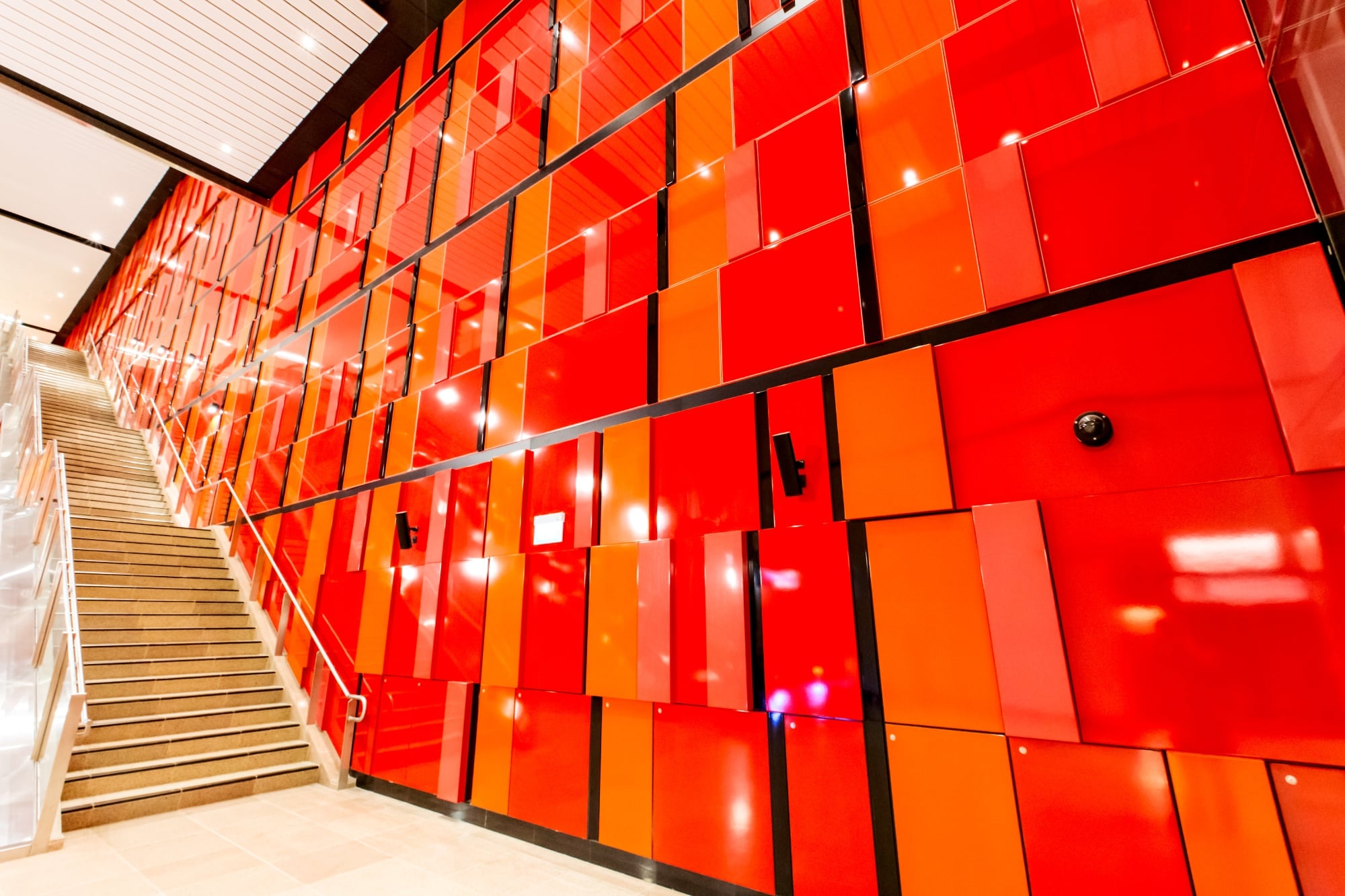
The Infrastructure Standard: Why Vitreous Enamel Dominates Transit Architecture.
Railway station cladding operates under a brutal matrix of operational constraints, demands so severe that they eliminate most standard architectural finishes before the specification process even begins. Transit assets must reliably survive a multi-decade service life under the relentless pressure of constant footfall, aggressive cleaning regimens, persistent graffiti attacks, and, at major interchanges, credible bomb blast-mitigation requirements.
Through every successive tightening of UK and international asset standards, vitreous enamel has remained the definitive choice across the transport network. By its very nature, this glass-fused-to-steel composite delivers an inherently non-combustible, chemically inert surface that resists vandalism without refinishing and maintains absolute colour stability across decades. Where ordinary materials represent an ongoing maintenance liability, vitreous enamel stands as a proven piece of critical infrastructure engineering.
This guide is written for specifiers evaluating vitreous enamel cladding for rail and underground station concourses, platforms, subways, canopies, and back-of-house environments. It covers the standards framework, the application zones, the material comparisons specifiers weigh, and what to look for in a supplier. For the material itself — manufacturing, panel systems, general specification — see our vitreous enamel cladding guide.
Table of Contents
Why vitreous enamel is specified for railway station environments
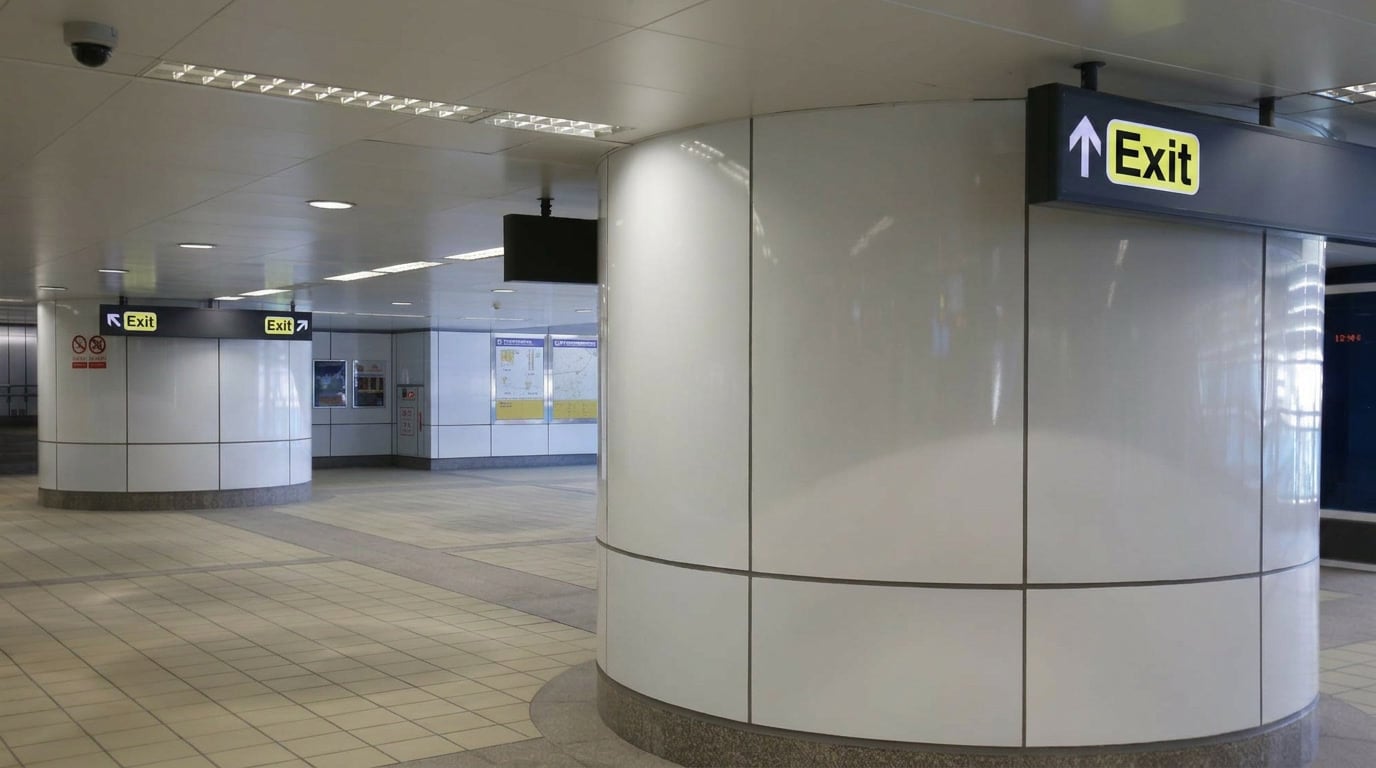
Rail infrastructure owners procure against whole-life cost, never initial capital expenditure alone. Operators such as Network Rail, Transport for London (TfL), HS2 and global operators evaluate cladding systems against an uncompromising matrix of expected service life requirements such as maintenance intervals, and the severe operational penalties of material replacement. In the rail sector, the financial implications of station shutdowns and line closures required for façade or internal cladding refurbishment completely dwarf any upfront material cost differentials.
Vitreous enamel outperforms standard finishes because the glass-fused coating remains completely chemically inert. It does not oxidise, fade under UV radiation, or degrade under the aggressive chemical solvents that transit operators utilise for nightly deep cleans. Graffiti removal becomes a routine solvent wipe rather than a complex refinishing operation, as the non-porous glass surface prevents pigment bonding. Furthermore, localized impacts that would instantly chip or delaminate standard organic paint systems leave vitreous enamel unscathed; the atomic fusion bond between the glass and steel distributes mechanical energy through the substrate rather than concentrating it at a vulnerable coating interface.
The material’s omnipresent, uninterrupted service across the London Underground or European networks provides the empirical proof of longevity that risk-averse specifiers demand. Emerging global rail infrastructure relies on this exact same material logic.
While its initial capital expenditure sits slightly above standard painted steel and below exotic architectural metals, its whole-life cost sits comfortably below both.
What are vitreous enamel panels?
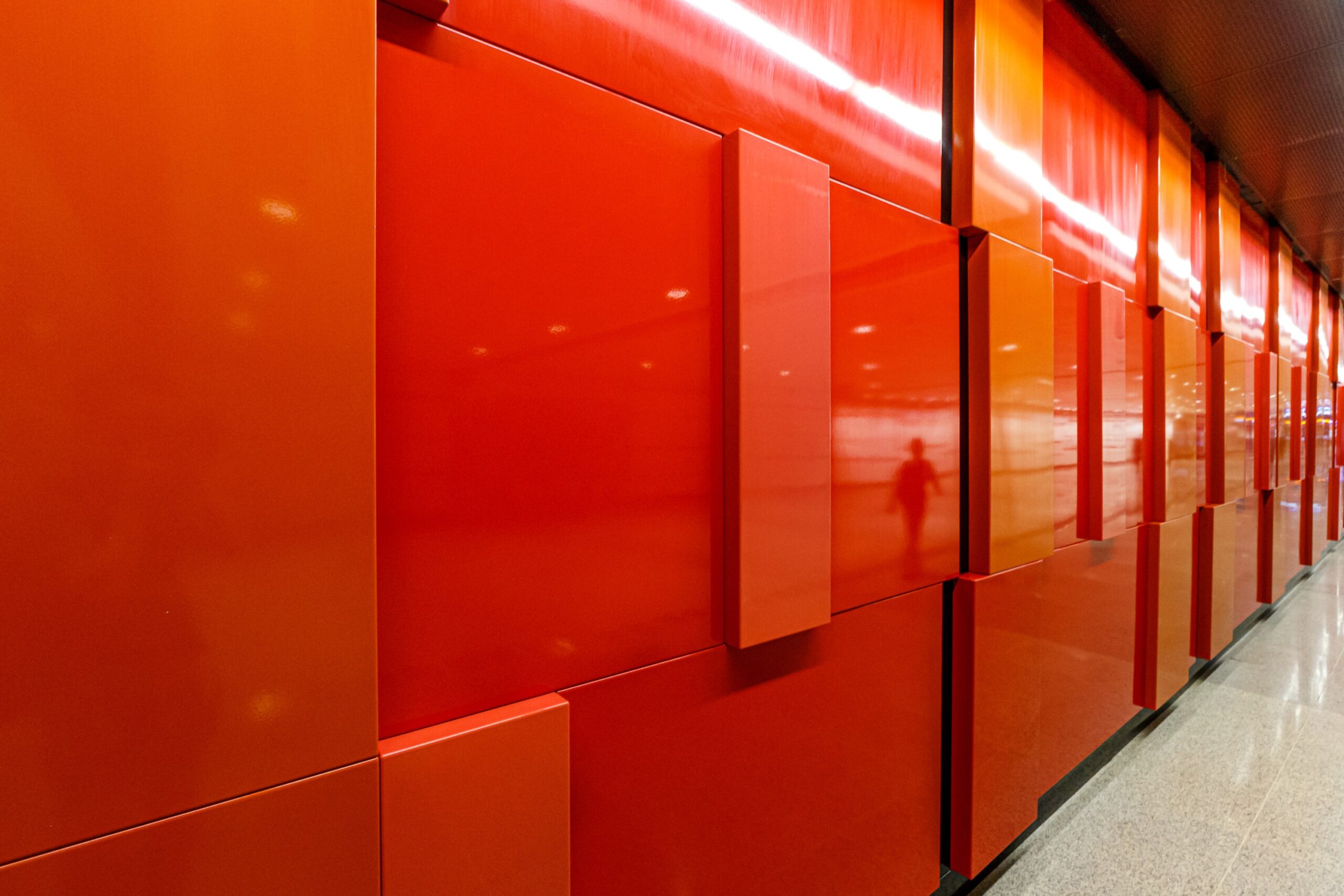
Vitreous enamel panels are shaped low carbon steel sheets with a decorative coloured glass coating that is fused to the steel at approximately 800°C in a furnace oven. This process produces an extremely durable, non-combustible surface integrally bonded to the metal. The coating is chemically inert, colour-stable, and rated A1 non-combustible to EN13501-1 the highest European classification for reaction to fire.
For the full material specification, manufacturing process, and panel system options, see our vitreous enamel cladding guide.
This page focuses on how the material performs in rail station and high-traffic environments and what specifiers need to evaluate when selecting it for station projects.
Rail sector compliance and standards
Rail station façades and internal cladding specifications operate under overlapping frameworks. In the UK, Network Rail, Transport for London, London Underground and HS2 each maintain technical standards, with Approved Document B applying to stations with residential or mixed-use elements above the station. In the global platform, local regulations govern fire performance across public infrastructure, with operator-specific standards applied by the local authorities.
Vitreous enamel cladding meets these frameworks through four evidence layers.
Fire performance
DynaPanel Vitreous Enamel carries a fire performance rating of A1, non-combustible classification to EN13501-1, the highest European reaction-to-fire rating, achieved by the material itself rather than by engineered treatments. A1 is the unconditional non-combustible category and satisfies post-Grenfell Approved Document B requirements in the United Kingdom and European public infrastructure façade and internal cladding requirements.
Bomb blast resistance
Category A transit hubs, encompassing major terminals, international interchanges, and designated high-threat zones, demand cladding systems engineered to withstand credible blast-loading scenarios.
To mitigate these risks, DynaPanel systems are rigorously tested and certified to ISO 16933:2007 arena blast testing to meet the requirements of ASIAD (Aviation Security in Airport Development) and SIDOS (Security in the Design of Stations) protocols.
These validations explicitly verify the system’s structural resilience against both Person-Borne Improvised Explosive Devices (PBIEDs) and Vehicle-Borne Improvised Explosive Devices (VBIEDs), the foundational testing criteria that govern fire-rated and blast-resistant cladding across global critical infrastructure. Because blast performance and kinetic energy dissipation are inextricably linked to exact boundary conditions, compliance is highly configuration specific. Consequently, project-specific arena test reports, detailing the exact panel dimensions, framing arrangements, and carrier-rail support conditions, must be meticulously matched and verified at the technical specification stage to satisfy strict security signoffs.
Holistic Rainscreen Assembly Compliance & Structural Integrity
It is a critical procurement misconception that panel-level fire performance equals a total system compliance. In reality, a panel’s individual fire certification represents just one component of a fully compliant, engineered rainscreen façade or internal cladding system. To satisfy the stringent regulatory frameworks of both the UK and the global industry, the entire unified assembly, must undergo rigorous holistic evaluation. To validate this, the system is assessed against the following industry-standard benchmarks:
CWCT (Centre for Window and Cladding Technology) Frameworks:
Validating system resilience against dynamic water penetration, wind loading (serviceability and safety), and hard/soft body impact testing.
BBA (British Board of Agrément) / EOTA (European Organisation for Technical Assessment) Certification:
Providing independent, third-party verification of the system’s performance, long-term durability, structural performance, and environmental stability.
Dynamic Cladding’s technical department works directly with tier-one contractors and specifiers to supply the project-specific technical documents required for smooth regulatory sign-off. This includes comprehensive test reports and certification documents, structural calculations and technical drawings to achieve regional compliance routes of both the UK and global markets.
Operator approval routes
Network Rail, LU, TFL, HS2, and global rail operators each maintain technical approval processes for station materials. Dynamic Cladding’s documentation pack including certifications, test data, installation drawings and operational documentation, is structured to match these approval frameworks.
Book a specification consultation
For rail infrastructure projects in the design phase, engaging with Dynamic Cladding’s technical team prior to tender clarifies the exact certifications and compliance documentation required for the project’s specific approval route. Book a specification consultation.
Vitreous enamel applications used on a railway station
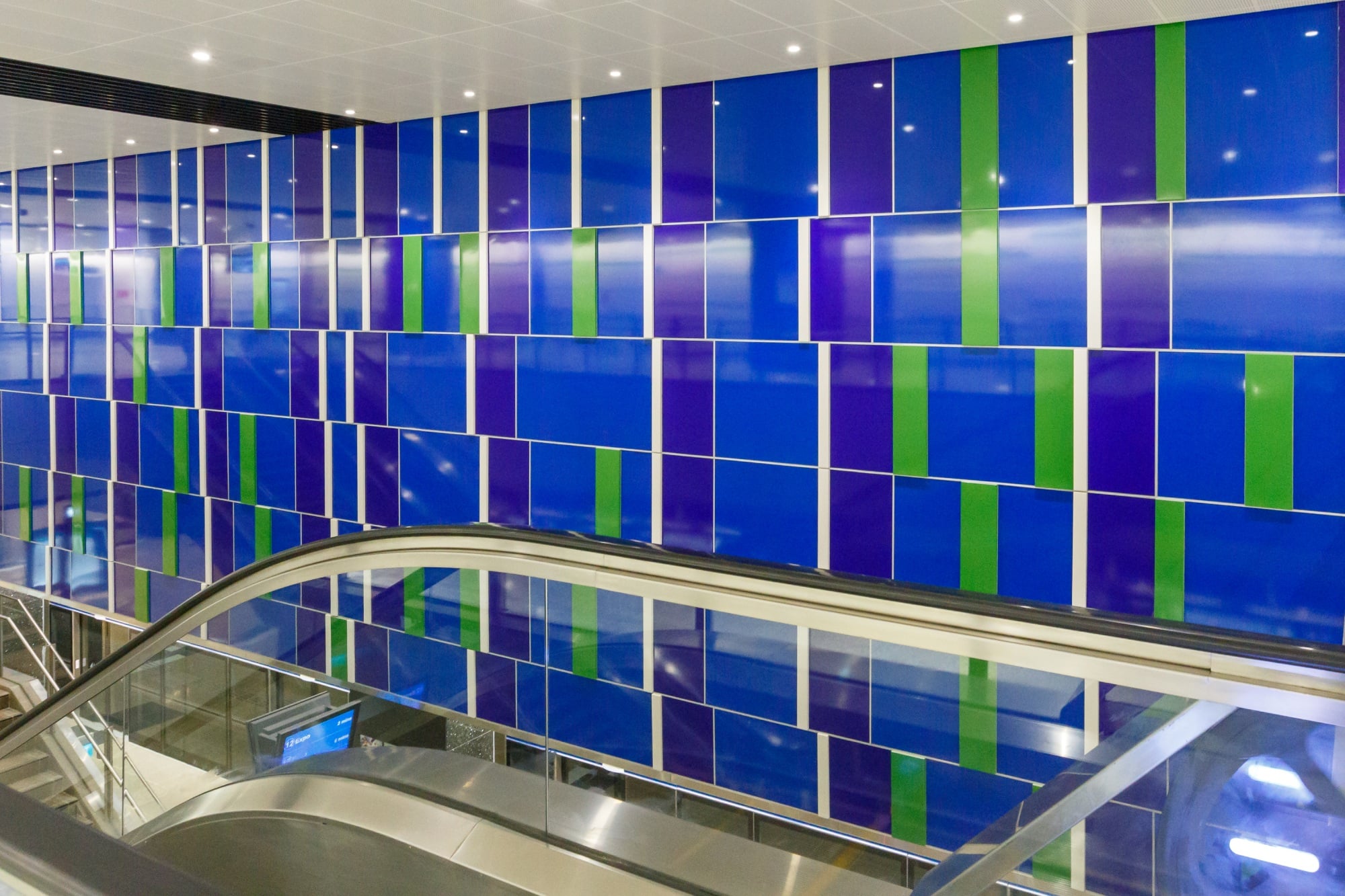
Station environments subdivide into zones with distinct performance demands. Vitreous enamel covers a broader range of these zones than most alternatives, which is why it recurs across rail infrastructure programmes.
Platform canopies and soffits
Station canopy finishes occupy a highly aggressive microclimate, enduring constant weathering cycles alongside severe condensation pooling between sheltered and exposed zones. Where canopies span electrified lines, the fire performance of the soffit and fascia lining is safety-critical; an A1 non-combustible classification mitigates the catastrophic risk of falling debris onto live overhead line equipment (OLE) without relying on secondary engineering trade-offs. Furthermore, on long-span canopy structures, absolute colour stability under intensive UV exposure is paramount; standard organic painted finishes fade unevenly across varying shadow lines, creating significant aesthetic defects over their service life.
Where perimeter canopies interface with public drop-off zones or modal interchanges, these assemblies must also satisfy strict security blast-mitigation criteria. This requires the panel configurations and their associated support sub-structures to be engineered to resist the dynamic overpressures associated with Vehicle-Borne Improvised Explosive Devices (VBIEDs). Specifying Dynamic Cladding’s DynaPanel Vitreous Enamel addresses this complex matrix of safety, security, and durability within a single, structurally proven tested system.
Concourses and ticket halls
Station concourse finishes endure the most punishing pedestrian and mechanical loads within the transit network. The baseline technical specification is strictly governed by rigorous resistance to scratching and scuffing, sustained crowd-loading pressures, and the ability to withstand aggressive nightly chemical deep-cleaning regimens while maintaining absolute colour retention.
Furthermore, because the concourse serves as the primary public zone and brand expression area, these surfaces must flawlessly balance engineering performance with aesthetic flexibility demands met through full RAL/Pantone colour matching and bespoke digital print capabilities fused directly into the panel finish.
Crucially, as high-density public assembly spaces, modern concourses serve as primary targets within critical infrastructure. Consequently, wall cladding linings in these zones must be engineered to mitigate blast fragment risks and structural displacement during a security event. This requires the system to be certified against the dynamic, close-proximity blast overpressures associated with Person-Borne Improvised Explosive Devices (PBIEDs). Specifying a system that pairs this extreme impact and blast resilience with an uncompromised architectural finish ensures that the station’s highest-traffic zones remain safe, secure, and visually pristine over a multi-decade lifespan.
Subways, underpasses, and pedestrian links
These subterranean and restricted-access zones combine relentless moisture exposure and limited ventilation with the highest statistical exposure to graffiti of any station area. Under these challenging environmental conditions, vitreous enamel’s naturally non-porous, solvent-resistant surface provides a critical operational advantage: graffiti can be completely eradicated via a standard chemical wipe without requiring any structural refinishing.
In sub-surface environments, this performance profile is highly significant. The alternative with standard painted or composite finishes is either a failure to remove visible tags or offensive messages, rapidly degrading the passenger experience, or the severe financial and operational penalty of partial station closures to allow for hazardous, localized recoating operations in confined spaces. Specifying an inert, glass-fused surface effectively de-risks these high-vandalism zones, converting a recurring maintenance liability into a predictable, zero-refurbishment asset.
Back-of-house and service corridors
Staff areas, plantrooms, and service corridors face impact from equipment movement and maintenance activity. Impact resistance, cleanability, and compliance with operational asset standards are the specification priorities. Dynamic Cladding’s, DynaPanel Vitreous Enamel delivers all three within a single specification.
Climate Performance & Environmental Resilience: From Europe to the Middle East
The justification for vitreous enamel crosses completely divergent climatic profiles, proving its versatility across European, British, and Middle Eastern environments.
In the UK and broader European markets, infrastructure assets must be specified to withstand relentless moisture cycling, summer temperatures, severe freeze-thaw dynamics, and salt exposure. Conversely, in the Middle East, the engineering demands shift toward resisting extreme ultraviolet (UV) radiation, severe diurnal thermal cycling across expansive ambient temperature ranges, and highly abrasive, fine desert particulates. Vitreous enamel outperforms alternative materials across all environmental extremes due to its unique material composition:
Zero UV Degradation:
Unlike organic polymer coatings or high-pressure laminates that chalk, embrittle, and fade under intense Middle Eastern sun exposure, the inorganic glass finish is completely immune to UV radiation, maintaining its structural and aesthetic integrity indefinitely.
Impermeable Moisture Barrier:
Because the surface is entirely non-porous, it cannot absorb moisture or humidity. This eliminates the risk of freeze-thaw spalling, common in wet European winters, as well as the subsurface corrosion risks found in coastal, high-salinity zones.
Abrasive Sand and Particulate Resistance:
Boasting a Mohs hardness rating akin to laboratory glass, the surface does not erode, scratch, or pit when subjected to sustained, wind-borne desert sandstorms.
Ultimately, the exact same material logic that survives the damp, high-vandalism, subterranean conditions of the London Underground seamlessly translates to survive the blistering heat, abrasive sand, and high-visibility requirements of the Middle Eastern concourse networks. For global transit operators, specifying vitreous enamel delivers an uncompromised, climate-agnostic solution.
Passenger Experience: Brand Identity, Commercial Marketing, and Wayfinding Integration
Station cladding is far more than a protective envelope; it is a critical communication surface. It must seamlessly host the operator’s corporate brand identity, dynamic commercial marketing streams, and essential passenger wayfinding networks, sometimes having to perform these applications while respecting strict conservation constraints when working within the historic fabric of listed or heritage-sensitive stations. The material specification must actively empower the design brief, rather than restrict it.
Vitreous enamel serves as an uncompromised, dual-purpose canvas that bridges the gap between architectural expression and high-performance engineering:
Integrated Wayfinding & Spatial Navigation:
Because directional signage and iconography can be fused permanently into the glass substrate, essential wayfinding systems, directing passengers to public restrooms, accessible routes, platform transfers, or security office locations, become a structural, vandalism-proof component of the cladding panel itself. There are no surface-applied vinyl layers to peel, scratch, or fade.
Bespoke Commercial Marketing & Digital Printing:
Modern transit hubs increasingly rely on high-impact visual zones to drive non-farebox advertising revenue, demanding cladding materials that can simultaneously serve as heavy-duty infrastructure and high-definition marketing canvases. Operator liveries and corporate identities are strictly colour-controlled assets, identity station finishes must meet exact, uncompromising colour prescriptions. Specifying DynaPanel Vitreous Enamel addresses these criteria perfectly, allowing complex graphic assets, multi-colour motifs, and large-scale imagery to be digitally printed and fused directly into the panel at a molecular level across the full RAL and Pantone spectrum, with bespoke matching available for custom operator formulations or existing heritage fabric. Unlike standard organic paint or applied vinyl coatings that fade, scratch, and wear unevenly, this inorganic glass-fused surface delivers pristine visual clarity and absolute, long-term colour stability. This ensures that precise brand consistency is flawlessly maintained across expansive, multi-station infrastructure programmes, remaining entirely immune to the severe physical abrasion of high-traffic public concourses.
Heritage and Listed Infrastructure Symmetry:
When modernising historic rail assets (such as London’s Grade II listed subterranean stations), specifiers face strict planning mandates to match existing colour schemes and material profiles. Vitreous enamel allows design teams to replicate traditional, mid-century architectural finishes with absolute geometric precision, satisfying heritage officers while simultaneously meeting contemporary fire-safety, blast-mitigation, and structural durability mandates.
By transforming static wall linings into dynamic, multifunctional communication assets, specifying DynaPanel Vitreous Enamel from Dynamic Cladding, ensures that operational clarity, commercial vitality, and historical preservation are delivered within a single, asset-grade lifecycle model.
Digital photorealistic printing, colour matching and brand compliance
Heritage station environments frequently require the precise reproduction of historic finishes, unique tiling patterns, or specialized artwork integration. Digital photorealistic printing applied directly to vitreous enamel substrates allows designers to replicate complex imagery at an architectural scale while successfully maintaining the project’s strict non-combustible performance requirements. This engineering choice provides a critical safety distinction from commercial printed laminates or vinyl wrap applications, which introduce organic binders and carry significantly different fire and smoke classification ratings.
CNC-engineered geometry
Station structures are rarely straightforward or square. Curved canopies, non-standard openings, and connections to existing brickwork or structural steel require panels cut to exact, unique dimensions. CNC fabrication ensures that every panel matches these specific shapes perfectly. By prefabricating everything in the factory, on-site work becomes a matter of quick installation rather than slow adjustments. This provides a major schedule advantage for projects operating directly around live train movements and busy pedestrian flows.
Vitreous Enamel vs. Alternative Station Cladding Materials
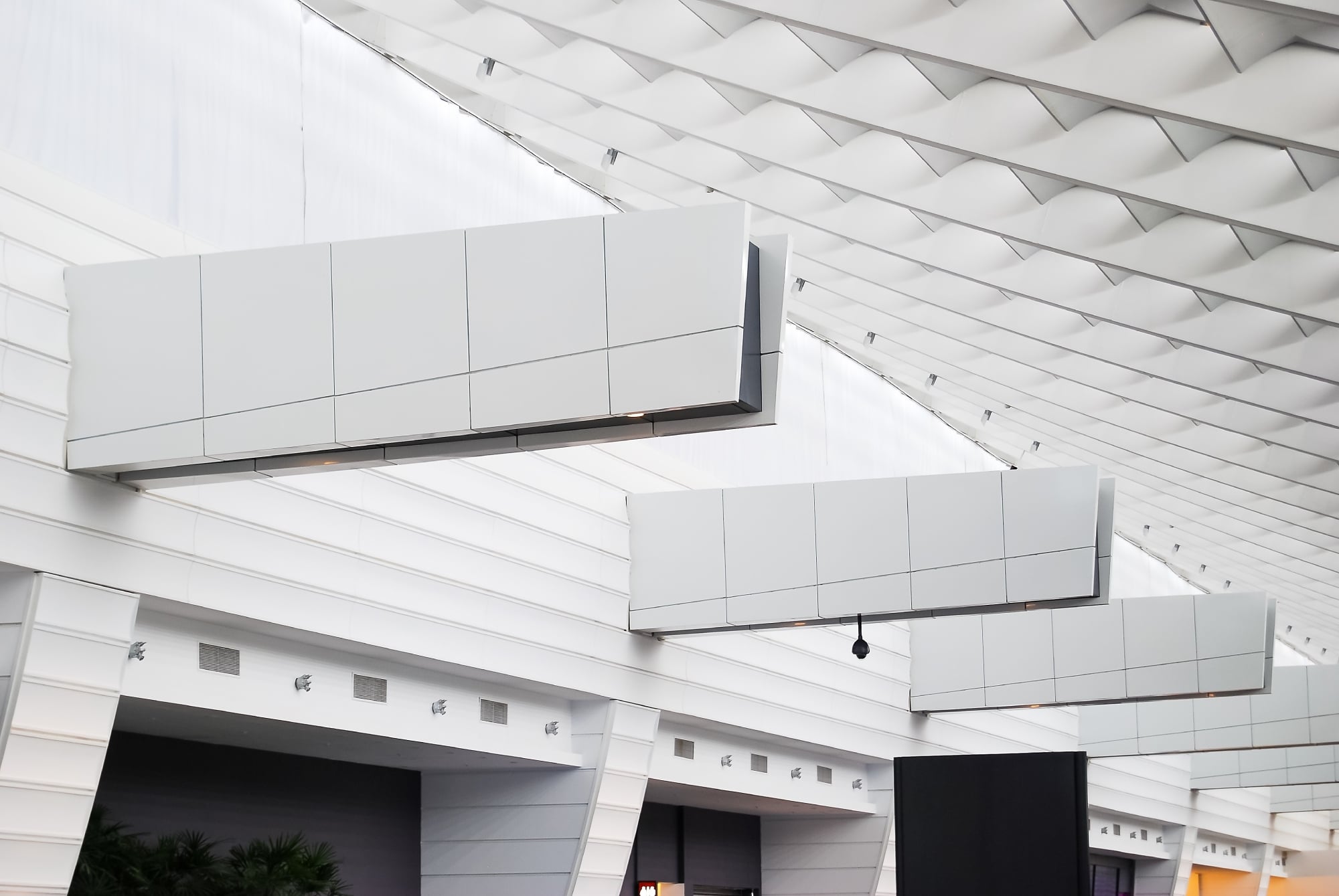
Specifiers evaluating vitreous enamel are typically weighing it against a longlist of alternatives. Designing for dense city centres means navigating specialized structural environments while protecting heavy, continuous pedestrian flows. Because public safety, station design and project timelines are paramount, a realistic material comparison is essential.
Vitreous Enamel vs. Porcelain and Ceramic Tiles
Traditional porcelain and ceramic tiles are often favoured for their stone-like or minimal aesthetics but scaling them to massive urban transit spaces introduces distinct engineering challenges. Porcelain provides comparable fire performance with A1 non-combustible classifications available, but the core divergence is weight and impact behaviour. Porcelain is significantly denser and prone to edge chipping.
More importantly, in high-security public areas, rigid ceramic tiles and heavy porcelain formats present a catastrophic adhesion risk under a blast loading. An explosion can cause brittle materials to delaminate from the adhesive layer, fracture into small pieces turning tiles into hazardous flying debris. In contrast, bomb blast tested vitreous enamel systems distribute impact and blast-wave energy through the panel and sub-framing together, preventing the panels detachment from the wall and flying material fragmentation.
Vitreous Enamel vs. Opaque Glass Panels
The use of opaque glass panels, such as DynaPanel Glass, represents an innovative shift in modern transit architecture. Laminated, tempered safety glass systems seamlessly combine vibrant styling with robust technical capabilities. High-performance options like DynaPanel Glass are certified to the highest European A1 non-combustible standards and are engineered to withstand extreme wind loads, high-traffic impacts, and full-scale bomb blast simulations without creating secondary fragmentation injuries.
While solid glass assemblies provide the ultimate high-impact visual prestige for front-of-house architecture, Vitreous Enamel is the ideal engineered solution for high-impact and back-of-house zones. In areas exposed to luggage trolley use, deliveries, and machinery loading, Vitreous Enamel can eliminate the need for foot rails or protective barriers. It offers a highly competitive cladding alternative that achieves a similar effect of glass, including saturated colour-matching and photorealistic digital printing, while providing the heavy-duty durability required to absorb rigorous daily operational impacts. A combination of both materials is often used in station design.
Vitreous Enamel vs. Real Stone Panels
Natural stone panels are frequently required in historic or heritage city environments to maintain local architectural contexts and are highly valued for their unmatched natural beauty and architectural warmth. However, conventional solid stone cladding presents a severe structural and safety challenge. Beyond adding high dead loads to the station structure, which complicates installation near active railway tracks and high-volume public traffic zones, standard natural stone panels completely fail to meet blast loading requirements for both interior and exterior applications. In explosion situations, conventional stone behaves as a highly dangerous material; under the high-pressure shockwaves of a blast, the rigid, brittle nature of unreinforced stone causes it to shatter into heavy, high-velocity shrapnel, turning the architectural facade or interior cladding into deadly projectile debris.
While vitreous enamel offers an excellent lightweight design route for replicating historic patterns via digital printing, projects requiring authentic, real stone aesthetics now have a certified structural solution: DynaPanel Stone.
DynaPanel Stone allows for the seamless integration of any natural stone type while engineered specifically to mitigate blast risks. It is engineered and fully certified to ISO 16933:2007 standards for both Vehicle-Borne Improvised Explosive Devices (VBIEDs) and Person-Borne Improvised Explosive Devices (PBIEDs). This advanced system ensures that heritage-matching natural stone can be safely deployed in high-security transit environments, offering unparalleled blast resilience without sacrificing the required historical architectural context.
Vitreous Enamel vs. Glass Reinforced Plastic (GRP)
GRP frequently appears on rail longlists due to its lightweight nature and moulding flexibility for complex, curved station canopies. However, rigorous modern fire performance guidelines disqualify standard GRP from most high-risk station applications—especially within dense urban city environments featuring residential or commercial properties above. Standard GRP fails to meet the strict non-combustible performance requirements mandated by modern Civil Defence codes. Even fire-retardant chemical variations rarely cross the threshold into unconditional A1 or A2 non-combustibility, eliminating GRP from some modern transit envelopes.
Vitreous Enamel vs. Metal Composite Panels
The viability of composite panels depends entirely on the project budget and the formulation of their inner core. Polyethylene-core composites are non-compliant for public infrastructure, whereas mineral-core alternatives achieve A2 fire classifications and are perfectly acceptable for standard use in less critical station concourses or low-traffic routes. However, where high-performance longevity is required, standard composite panels cannot match the extreme environmental endurance of Vitreous Enamel. The true advantage lies in Vitreous Enamel’s uncompromising structural resilience. Composite panels lack the heavy-duty impact resistance needed to withstand dense commuter traffic and are easily degraded by harsh maintenance chemicals. In contrast, vitreous enamel provides superior impact defence, graffiti-proof chemical resistance, and total immunity to surface scratching. For high-risk urban station approval routes, this combination of ultimate fire safety and physical invulnerability remains a critical factor in securing regulatory sign-off.
Vitreous Enamel vs. Painted or Powder-Coated Steel
This comparison is defined by lifecycle costs and schedule management. Painted or powder-coated steel offers a lower initial capital cost and meets basic station requirements at the specification stage. The divergence happens over time: standard paint applications require periodic recoating every 10 to 15 years. Coordinating this maintenance requires specialized access equipment, strict maintenance windows, and temporary station disruptions, costs that pile up over the asset’s lifetime. Because vitreous enamel never requires recoating and cleans easily, its whole-life cost consistently favours projects designed against a 40- to 50-year service lifespan. Prefabricating these panels off-site means field work becomes a matter of rapid installation rather than slow on-site adjustment, giving a massive schedule advantage to projects operating around busy, live urban environment movements.
Cost and whole-life value considerations
Specifiers searching for rail cladding cost data are rarely looking for a simple rate card; instead, they are building a robust specification case capable of withstanding intense procurement scrutiny. The critical metric is not an isolated per-square-metre figure, but the comprehensive cost structure applied during tender evaluations. To pass this scrutiny, the financial narrative must focus on Whole Life Costing (WLC). This means demonstrating how premium material selection drives down long-term expenditure by drastically reducing maintenance intervals, eliminating specialized protective coatings, and mitigating the immense operational costs of premature asset replacement. By anchoring the case in long term resilience and risk mitigation, specifiers can deliver a commercially unassailable proposal that aligns perfectly with modern rail procurement objectives.
Capital cost positioning
In terms of upfront capital cost, vitreous enamel occupies the mid-to-upper tier of the rail cladding market. It carries a premium over standard painted or powder-coated steel, sits roughly on par with porcelain ceramic panels, and remains a more cost-effective choice than architectural metals like stainless steel, bronze, or weathered steel. Final panel pricing is naturally fluid, shifting based on panel dimensions, colour complexity, digital print requirements, and fabrication geometry. Rather than relying on rigid desktop estimates during the early budgeting phases, the most efficient way to secure accurate, project-specific pricing is through a direct specification consultation.
Whole-life cost structure
Rail procurement looks far beyond the initial price tag, evaluating cladding over a 40- to 50-year lifespan where maintenance, refinishing, and eventual replacement completely overshadow upfront capital costs. This is where vitreous enamel delivers its real value, largely because of the standard material problems it eliminates. Unlike painted finishes that demand disruptive recoating cycles every 10 to 15 years, vitreous enamel never needs to be recoated, entirely bypassing the massive track-possession and access costs that come with station closures. Furthermore, its glass-hard surface is completely impervious to graffiti, allowing tags to be wiped away with standard solvents without ruining the finish or requiring spot repairs. Because it easily withstands the harsh industrial cleaning agents used in nightly station washdowns, chemicals that quickly degrade softer alternative materials, it stands up to decades of heavy operational abuse without breaking a sweat.
Installation and programme cost
Prefabricated panel delivery shortens on-site installation against field-applied finishes. For refurbishments delivered under possession-only working, where the window is measured in hours rather than days, installation speed translates directly into programme feasibility. Vitreous enamel’s prefabricated format and standard fixing interfaces to support the compressed programmes rail projects demand.
The procurement conversation
Major rail and infrastructure procurement frameworks increasingly evaluate tenders against whole-life cost rather than traditional capital-cost-only submissions. Both domestic transit authorities and international infrastructure bodies are shifting toward this long-term value model. The specification case for vitreous enamel is purpose-built for this procurement framing. While capital costs are positioned transparently, the material’s true value is realized through documented operational cost avoidance, minimal maintenance requirements, and exceptional durability across the station’s entire lifecycle.
Navigating the Paperwork: The Reality of Rail Station Specifications
Rail station procurement is notoriously documentation heavy. Long before a single panel is delivered to a site, specifiers and design teams must navigate a mountain of material certifications, structural test data, and compliance matrices mapped to strict authority frameworks. In this environment, the quality of a manufacturer’s technical documentation acts as the ultimate gatekeeper; it is what separates a supplier who is specified from one who is simply considered.
Pre-Tender Technical Collaboration
Early engagement helps mitigate risks before the tender process begins. The Dynamic Cladding technical team collaborates closely with architects and facade consultants from the initial design stages, providing detailed panel system drawings, engineered interface details for existing station structures, and necessary system-level calculations. Addressing these complex structural junctions early in the process ensures that specification clauses remain achievable and robust when transitioning into the detailed design phase.
Eliminating the “Cut-and-Paste” Risk
Architects are all too familiar with the pitfalls of relying on generic specification templates, which frequently lead to coordination errors on complex rail projects. To address this, Dynamic Cladding provides project-specific clauses for the DynaPanel Vitreous Enamel system tailored for direct integration into standard specification platforms (such as NBS). By detailing exact material chemistry, fabrication tolerances, fixing methods, and performance benchmarks, this support reduces the drafting burden on design teams while ensuring that the tendered requirements align precisely with realistic manufacturing and delivery capabilities.
Physical Proof: Samples and Mock-Ups
Physical validation is a standard requirement for station infrastructure. Dynamic Cladding supports this process by supplying production-representative colour samples and fabricating full-scale visual mock-ups for complex or heritage-sensitive concourses. The team facilitates the off-site visual approval process, ensuring materials align with the strict quality and aesthetic standards set by major transit authorities.
From Tender Submission to Decades of Operation
For the tender submission, Dynamic Cladding provides a structured, project-specific compliance pack rather than a generic collection of data sheets. Documentation is organized to align directly with the specific approval frameworks used by national rail operators, regional transit authorities, and international transport bodies. This pack includes EN13501-1 fire classifications, blast testing system certification to ISO 16933:2007, and all required third-party certificates. Following project completion, this support extends to the handover phase. Dynamic Cladding supplies a comprehensive operational asset package, including precise cleaning protocols, maintenance intervals, and panel replacement procedures to assist station management teams in maintaining the asset over its multi-decade lifespan.
Frequently asked questions
Does vitreous enamel cladding meet fire safety requirements for station environments?
DynaPanel Vitreous Enamel carries A1 non-combustible classification to EN13501-1, the highest European reaction-to-fire rating and the unconditional non-combustible category. This satisfies UK rail operators’ fire safety requirements, including stations with residential or commercial elements above the station box where Approved Document B applies.
What is the expected service life of vitreous enamel cladding in a railway station environment?
Vitreous enamel has remained in continuous service across the London Underground network and UK mainline stations for multiple decades. For specification purposes, rail asset life assumptions of 40 to 50 years are supportable, and the absence of recoating cycles across that period is the operational cost differentiator against painted alternatives.
Can vitreous enamel panels be specified for bomb blast resistant applications on rail and underground stations?
Yes. DynaPanel blast-certified systems are tested to ISO 16933:2007, ASIAD, and SIDOS protocols for both VBIEDs and PBIEDs blast tested performance, the frameworks used across transport infrastructure procurement. Certification is specific to panel configurations and support conditions, so the relevant test report is matched to the intended project configuration at the specification stage.
Can the panels be produced to match a rail operator’s corporate brand colours and design?
DynaPanel Vitreous Enamel is produced across the full RAL range with bespoke colour matching to Pantone references, operator-specified custom colours, or samples drawn from existing station fabric. The glass coating’s colour stability means specified colours hold across multi-station programmes where consistency is part of the brand specification.
How does vitreous enamel compare to porcelain ceramic cladding for station concourses?
Both materials carry A1 to EN13501-1 fire classifications and deliver the durability rail environments require. However, the specification choice resolves on weight, impact behaviour, blast performance, and colour capability. While porcelain is prone to edge-chipping, vitreous enamel utilizes a steel substrate to distribute mechanical impacts. Furthermore, Dynamic Cladding’s vitreous enamel system has been specifically developed and tested to withstand blast loadings, offering proven energy absorption and structural capability that porcelain cannot match. Vitreous enamel also delivers a level of saturated colour, bespoke matching, and digital printing depth that remains unachievable with porcelain.
What lead times apply to vitreous enamel cladding on rail projects?
Lead times depend on panel quantity, colour specification, fabrication complexity, and whether mock-ups or sample approval are required before production. For indicative lead times matched to a specific project, a specification consultation at the earliest feasible stage allows production planning to align with the project programme.
Specify with confidence
Rail station cladding decisions carry 40-to-50-year consequences. Specifying against that horizon demands documented compliance, tested performance, and supplier documentation that maps directly to the approving authority’s framework.
For station projects in specification or tender preparation, book a specification consultation to confirm DynaPanel Vitreous Enamel’s fit against the project’s technical and compliance requirements. For specifiers evaluating options at an earlier stage, request technical data to access the certification pack, system drawings, and performance documentation.